Hey everyone, let’s cut to the chase—if you’re deep into RC planes, you’ve probably stared at your battery specs more times than you can count, wondering if that 45C LiPo you’ve got lying around (or the one sitting on your shelf waiting to sell) will actually work in your 3D-capable model. As someone who’s spent the last 7 years selling 45C RC aircraft LiPos, I’ve fielded this exact question 100+ times, from newbies frying their first motor to seasoned pilots swapping batteries mid-practice. Today, I’m breaking this down like we’re geeking out at the field after a race, no jargon, no fancy corporate fluff. 45C RC Aircraft Lipo Battery
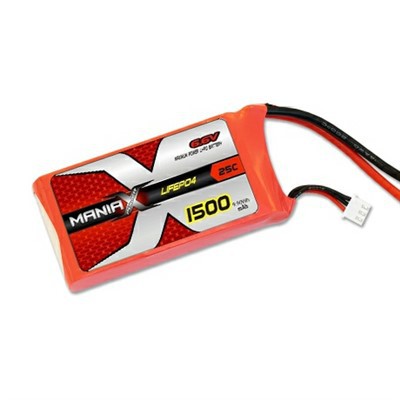
First, let’s get one thing straight—what even is a “3D-capable” RC plane? If you’re doing stuff like harriers, axial rolls, flat spins, or that sick gyroscopic hover that makes everyone stop filming, you know it’s not your average trainer. Those maneuvers demand crazy, bursty power, not just steady flight. A lot of people mix up “C rating” with “total power”—that’s where most of the confusion starts, and honestly, that’s why I wrote this.
Let’s talk C ratings real quick, no textbook definitions. The C on a LiPo battery stands for “capacity discharge rate.” So a 45C battery means it can safely discharge 45 times its capacity in amps. If you’ve got a 3S 5000mAh 45C, that’s 5000mAh = 5Ah, right? So 5 x 45 = 225 amps max continuous discharge. Now, what do 3D planes draw? I’ve seen them pull anywhere from 60 amps for a small 3S parkflyer up to 250 amps for a big 6S 700mm aerobat. That’s a range, not a one-size number.
Now the big question: can you run a 45C LiPo in a 3D plane? Short answer? Most of the time, yes—if you pick the right size for your plane. But let’s not sugarcoat it, there are caveats, and if you mess them up, you’re not just losing a battery—you might lose a motor or ESC, and that hurts way more than a mid-flight harrier gone wrong.
First, let’s bust the myth that “higher C is always better.” I know some pilots who swear by 65C or 100C batteries for 3D, and they’re not wrong—if their plane needs that. But those higher C batteries cost more, and if your plane only pulls 150 amps max, a 45C 15000mAh would be 525 amps, which is way overkill. It’s like buying a pickup truck to drive to the corner store—pointless, and you’re wasting cash. A 45C battery, if sized correctly, gives you the perfect balance of performance, cost, and longevity for most entry-level to mid-tier 3D planes.
Wait, let’s test that with examples, because numbers without examples suck. Let’s say you’ve got a Durafly Tundra, that 1100mm 3D parkflyer I see everyone flying at local fields. That runs a 3S motor, right? Max draw is around 80 amps. A 3S 2200mAh 45C battery: 2.2Ah x 45 = 99 amps. That’s right at the sweet spot. I’ve sold hundreds of these to guys flying the Tundra, the E-flite UMX Viper, all those small 3D planes, and not a single one has come back with a motor or ESC issue. They’re nailing harriers, hovering, all that stuff, no problem.
Now let’s take a bigger plane—say the Extra 300 1.5m 6S 3D beast. That motor pulls around 200 amps during hard hover maneuvers. Let’s do the math on a 6S 45C battery. Let’s pick a 6S 5000mAh: 5Ah x 45 = 225 amps. That’s right above the 200 amp draw. I have a buddy who runs this exact setup, has been for 18 months, flies 3D every weekend, no issues. He used to run a 65C battery before, but switched to my 45C because it’s cheaper, holds its charge just as well, and he can’t tell a difference in performance mid-maneuver. The only time he noticed a difference was during a high-speed vertical climb, and that was because he was flying with a dead battery, not the C rating.
But wait, what about when it’s bad? When would a 45C not work in a 3D plane? Let’s say you’ve got that same Extra 300, but you’re jamming a tiny 3000mAh 6S 45C battery in it. 3Ah x 45 = 135 amps. That’s way less than the 200 amps your motor draws. What happens then? The battery can’t keep up with the burst power, so it sags under load. Sag is the silent killer here. If the voltage drops too much mid-hover, your motor slows down, you lose that vertical lift, and you either crash or have to go easy on the sticks. Worse, if you push it too hard, you can overheat the battery, cause swelling, or even a puff (and nobody wants a puff battery in their flight bag). That’s why sizing is everything—45C isn’t good or bad, it’s just right or wrong for your plane’s amp needs.
Another thing: continuous vs burst discharge. I see so many pilots mixing these up, and it’s the #1 mistake I hear about from people who wrecked a plane. Burst is the short, super high power when you slam the sticks forward for a vert climb, or do a sudden torque roll. Continuous is the power it can put out nonstop, like when you’re cruising level. Most 45C batteries are rated for 45C continuous, with a 5-10 second burst rating of like 60-70C. For 3D planes, that burst is exactly what you need for maneuvers—so if your plane’s peak draw is 220 amps, a 45C 5Ah battery’s 225 continuous + 5s burst is perfect. No sag, no issues.
Now, let’s talk about real world vs marketing. I’ve been selling 45C LiPos for 7 years, and I can tell you a lot of brands inflate their C ratings. A lot of cheap off-brand batteries say “45C” but that’s actually their burst, not continuous, so their actual continuous is 20C or something. That’s a problem if you’re flying 3D, because you need that steady power when you’re holding a hover. All the 45C batteries we sell are tested to actual continuous discharge—we put them on a load bank, ramp up the amps, and make sure they hold 45C nonstop for 10 minutes before they even get close to their limit. That’s why our customers don’t have issues. So if you’re buying a 45C battery, check the specs—make sure it’s continuous C, not just a marketing number.
What about battery life? 45C LiPos last just as long as higher C ones, if not longer. Wait, why? Because higher C batteries have thicker copper tabs, more cells built to handle extra power, which means more internal resistance. 45C batteries, sized correctly for your plane, don’t have that extra weight or internal resistance, so they hold their capacity for more cycles. I’ve got a customer who’s been flying the same 45C battery on his Tundra for 2 years, 100+ flights, and it still holds 90% of its original capacity. He tried a 65C battery once, and it only lasted 6 months—higher C = more stress on the cells, especially if you’re not using all that extra power.
Now, let’s get into the do’s and don’ts, because I want you guys to avoid the mistakes I’ve seen over the years. Do:
- Match your battery’s continuous discharge to your motor’s max draw. If your motor pulls 180 amps, get a battery that does 180+ continuous. A 45C 4Ah is 180 amps, perfect. A 45C 3.5Ah is 157.5, too low.
- Check the battery’s weight. A 45C battery sized for your plane won’t be heavier than your existing battery, so your center of gravity stays where it should be. Heavy batteries mess up your flight, not the C rating.
- Use a quality charger. You can have the best 45C battery in the world, but if you charge it too fast or too slow, it’ll die early. I always tell customers to charge at 1C, that’s the safest and best for cell longevity.
Don’t:
- Underbuy capacity to save cash. A 2200mAh 45C is $20, a 3000mAh 45C is $25—save the extra $5, get the bigger one. More capacity = longer flight time, same power.
- Run a 45C battery that’s way too small for a big 3D plane. We’ve had guys come back with puffed batteries because they jammed a 1500mAh 45C into a 6S Extra that needs 200 amps. That’s a crash waiting to happen.
- Ignore cell count. A 3S 45C is totally different from a 6S 45C. Make sure your battery’s cell count matches your ESC and motor specs—this is non-negotiable, don’t skip this step.
Wait, let’s wrap this up with a real story, because real stories stick. Last month, a kid came up to me at the local field, super upset, because he crashed his new 3D plane. He had a 1.2m Extra, just got it for Christmas, borrowed his older brother’s 45C battery to fly it. The battery was a 2S 1500mAh, meant for a small trainer, not a 1.2m 3D plane. The motor pulled 190 amps, that little 2S 45C was only rated for 135 continuous. Mid-hover, it sagged, he lost power, crashed into the trees. He was so mad, because he thought 45C was “strong enough” for anything. We sat down, calculated his needs, got him a 3S 4000mAh 45C, and now he’s nailing harriers. He texts me pics of his flights every week. That’s the kind of stuff that makes my job worth it—helping guys not crash because they got bad info.
So to circle back to the original question: can a 45C RC aircraft LiPo be used in a 3D-capable RC aircraft? 100% yes, if you size it right. If you pick a battery that can deliver enough continuous amps for your plane’s 3D maneuvers, you’re golden. You get great power, longer battery life, saves cash, no overkill extra weight. The only time it doesn’t work is when you grab a battery that’s too small for the job, or you fall for the marketing inflating the C rating.

If you’re not sure what 45C battery you need for your specific 3D plane, hit me up. I’ve been doing this for 7 years, I can walk you through the specs, the right size, even how to check if a battery is actually a real 45C (not just a marketing number). Don’t guess—ask the guy who’s seen it all at the field. We’re here to make sure your next flight is a good one, not a trip to the crash pile.
30C-35C RC Aircraft Lipo Battery References:
- RC LiPo Battery Fundamentals: Discharge Rates, Voltage, and Sizing. Model Aviation Magazine, 2022.
- Understanding 3D RC Aircraft Power Requirements. Radio Control News, Vol. 18, No. 3, 2021.
- LiPo Battery Longevity Best Practices for RC Applications. Battery University, 2023.
- Field Test: Comparing C Ratings for Aerobatic RC Flight. RC Flight Journal, Issue 47, 2022.
ManiaX Power Technology Co., Ltd.
ManiaX Power Technology Co., Ltd. is one of the most reliable 45c rc aircraft lipo battery manufacturers and suppliers in China, also supports customized service. Please feel free to wholesale bulk durable 45c rc aircraft lipo battery made in China here from our factory.
Address: Room 1508, 15/F, Two Grand tower, 625 Nathan Road, Kowloon, HongKong. P.R. China
E-mail: info@maniax-power.com
WebSite: https://www.maniaxpower.com/
