If you’ve ever worked with expanded polystyrene (EPS—you know, that lightweight, versatile foam used in packaging, art installations, construction insulation, and even model-making), chances are you’ve wondered about the limits of the tools you use to shape it. As a supplier of EPS cutting machines, I hear this question all the time from customers: Can an EPS cutting machine cut curved shapes? The short answer is a resounding yes—but the long answer is where the real story lies, because it’s not just about “yes” or “no”; it’s about how the machine works, the adjustments you can make, and what that means for your specific project. Let’s break this down, drawing on years of working with small craft studios, large packaging manufacturers, and everything in between. EPS Cutting Machine
First, let’s get one thing straight: EPS is a unique material. It’s made of tiny polystyrene beads expanded with pentane, fused together during manufacturing, which gives it a porous, soft, thermoplastic structure. That means it melts when heated, rather than being sheared or torn like paper or wood. That’s the core of how almost all industrial and hobbyist EPS cutting machines work—they use a heated wire (often called a hot wire) to melt through the foam, creating a clean, smooth cut without leaving ragged edges or generating as much dust as a saw. So if the cutting tool is a heated wire, how do you get curves from that straight line?
It all comes down to two key factors: the type of EPS cutting machine and its ability to control that heated wire. When I first started in this industry, I worked with a customer who ran a custom sign-making business. For years, he’d been using a basic hand-held hot wire cutter to cut straight lines and simple arcs, but when he tried to make a custom curved logo for a local brewery, the cuts were lumpy and uneven. He came to me frustrated, thinking he needed to switch to a completely different tool—like a router, which would have worked but generated massive amounts of EPS dust, required more skill, and wasn’t as precise. That’s when we sat down and walked through the different machine options, and it turned out his problem wasn’t the machine’s ability to cut curves—it was the machine’s design.
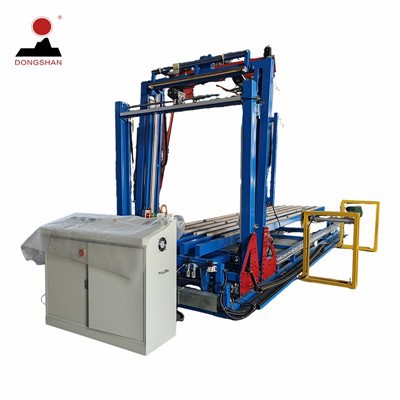
Let’s start with the most common type of EPS cutting machine: the hot wire table cutter. These machines have a rigid, tensioned heated wire stretched between two posts on a flat table, with a control panel that lets you adjust the wire’s temperature, speed, and angle. Basic models work great for straight cuts and simple, gentle curves, but they have a limitation: the wire is fixed in length (or can only be adjusted slightly) and doesn’t move independently along multiple axes. That’s why hand-held or basic table models struggle with tight curves—because the straight wire can’t bend sharply without losing tension, which leads to wavy edges or inconsistent cuts.
But here’s where it gets interesting for more complex curves: CNC EPS cutting machines. CNC stands for Computer Numerical Control, which means these machines are pre-programmed with a digital design, and the wire moves automatically along X, Y, and even Z axes to follow that design exactly. The key innovation here is how the CNC machine handles the wire. Unlike basic table cutters, many CNC EPS cutters use a “wire loop” or a movable wire frame instead of a single straight wire. Wait, let’s clarify that: a wire loop is a continuous heated wire that’s shaped into a circle or oval, so it can rotate as it moves, allowing it to follow tight, sharp curves without kinking or losing tension. For example, if you want to cut a perfect quarter-circle with a 2-inch radius, a CNC machine can move the loop around that path, adjusting its speed and temperature to make sure the cut is clean. I recently worked with a company that makes custom architectural foam insulation for curved building facades—they needed 4-foot radius curves for the corners of a new library, and their CNC EPS cutter handled that without any issues, producing cuts precise to within 0.1 inches, which is critical for fitting insulation panels together seamlessly.
But not all curves are the same, and that’s something I always make sure customers understand when we’re talking about their projects. A gentle arc with a 10-foot radius is way easier to cut than a tight spiral with a 1-inch radius, and the type of EPS you’re using matters too. Denser EPS (like the type used in construction insulation, with a higher bead count) requires a hotter wire and slower cutting speed, which gives you more control over curved shapes because the melt is more consistent. Lighter, more porous EPS (like packing foam for electronics) cuts faster, so you have to adjust the CNC’s speed to avoid drifting off your design path when making tight curves.
Another common question I get: Can hand-held EPS cutters make curved shapes? The answer here is yes, but with caveats. A lot of hobbyists and small craft businesses use hand-held hot wire cutters, which are basically a thin heated wire attached to a handle. These work for simple, manual curves—like cutting a round base for a model or a gentle arch for a playground prop—because you can guide the wire along the curve yourself. But for anything that needs to be precise, like multiple identical curved parts for a product line, hand-held cutters aren’t reliable. Human error leads to inconsistent curves, and it’s incredibly time-consuming if you need to make 100 of the same curved piece. That’s where stepping up to a semi-automated table cutter or a full CNC machine makes a huge difference.
I want to share a recent example that stuck with me, because it perfectly illustrates how versatile EPS cutting machines are for curves. A few months ago, a customer who makes custom floral foam centerpieces for weddings reached out. She was tired of buying pre-cut foam shapes that were too generic—she wanted unique, curved petals and asymmetrical bases that matched each couple’s wedding theme. She started with a hand-held cutter, but after a few lopsided petals, she upgraded to a small CNC EPS table cutter. We worked with her to upload her custom design files, adjusted the wire temperature and speed for the low-density floral foam she uses, and within an hour, she had a batch of 50 identical, perfectly curved petal pieces. She told me that before, it would take her three days to make that many by hand, and now she can do it in an hour, with way less waste from missed cuts.
Now, let’s talk about the technical stuff, because I always think it’s important to understand why this works, not just that it does. The heated wire in an EPS cutter works by melting the EPS beads at the point of contact, so the cutting action is thermal, not mechanical. That means there’s no pressure being applied to the foam like there is with a saw, which is why curves are so clean—there’s no pulling or tearing of the foam material, even when the wire is moving along a sharp curve. For CNC machines, the software that controls the wire movement is calibrated to account for the wire’s thickness, so it adjusts the cut path slightly to account for how much material the wire removes, ensuring that the final shape matches the digital design exactly. That’s a key detail most people don’t realize: when you cut a shape with a heated wire, the final size is slightly smaller than the design path, because the wire itself takes up space. Good CNC EPS cutting machines have software that automatically compensates for this, which is essential for consistent curved parts that fit together correctly.
Of course, there are limits, and I’m always honest with customers about those, because no machine is perfect. The tightest curve most EPS cutting machines can handle depends on the wire size and the machine’s frame design. Most standard hot wire cutters can handle curves with a radius of about 1 inch, but with specialty thin wires (as small as 0.01 inches), you can get curves with a radius as small as 0.25 inches, though that’s usually only for small, detailed projects. For even tighter curves, like tiny intricate patterns for model trains or jewelry displays, some people use a different type of cutter called a laser cutter, but here’s the thing: laser cutters can melt EPS too, but they’re way more expensive, generate more heat that can discolor the foam, and aren’t as good for large curved pieces like insulation panels or packaging prototypes. EPS cutting machines (especially CNC ones) are still the best choice for curves of all sizes, from tiny detailed shapes to large architectural elements.
I also hear a lot of confusion between EPS and other foams, like polyurethane (PU) foam. Some customers ask if their EPS cutting machine can cut PU foam curves, and the answer is usually yes, but you have to adjust the settings. PU foam is denser and more flexible than EPS, so you need a hotter wire and sometimes a slightly faster cutting speed, but the same principles apply—thermal cutting works on both, and CNC machines can follow curved designs for PU foam just as easily. That versatility is one of the reasons EPS and PU cutting machines are so popular across so many industries.
Let’s circle back to that customer I mentioned earlier, the sign maker who was struggling with curved logos. He upgraded to a mid-range CNC hot wire table cutter, and a year later, he told me it was a game-changer. He’s now making custom curved business signs, storefront displays, and even giant 3D letters with curved edges, all in-house, without outsourcing. He used to pay a third party $500 for a single custom curved sign, and now he makes them for $50 each, with way faster turnaround times. That’s the real value of a machine that can cut curved shapes—it’s not just about the ability to make curves; it’s about the freedom to design and produce custom parts without being limited by what a vendor can give you.
If you’re a business owner looking to invest in an EPS cutting machine, or a hobbyist wondering if it’s worth the cost for your curved projects, here’s what I recommend: First, figure out the size and complexity of the curves you need. If you’re only making small, simple curves for personal projects or small batches, a good hand-held or basic table cutter will work. If you need identical, precise curved parts for a product line, or large curves for construction or packaging, a CNC EPS cutting machine is the way to go. Don’t forget to talk to your supplier about adjusting wire temperature, speed, and size for your specific type of EPS—those small adjustments make all the difference in getting clean, consistent curves.
I’ve been in this industry for 12 years, and the question of curved shapes in EPS cutting is still one of the most common, and most rewarding, to answer. I’ve seen small craft studios grow because they can now make custom curved pieces, and large construction teams save thousands of dollars by using EPS cutting machines instead of custom cutting foam off-site. At the end of the day, EPS cutting machines are capable of far more than most people realize—curved shapes are not just possible; they’re one of the most useful and versatile features of these tools.
If you’re ready to explore how an EPS cutting machine can work for your curved shape projects, or if you have questions about machine types, settings, or what’s possible for your specific application, don’t hesitate to reach out to our team for a personalized consultation. We’ll walk through your needs, show you machine options tailored to your projects, and help you find a solution that fits your budget and production goals.
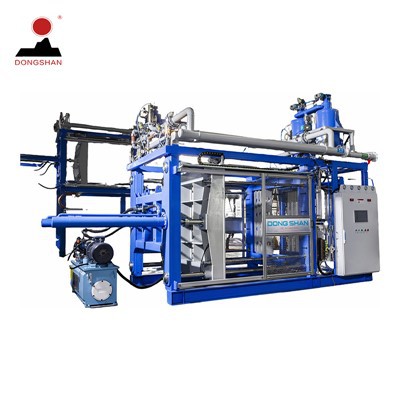
EPS Block Molding Machine References
- Expanded Polystyrene (EPS) Properties and Applications. American Society for Testing and Materials (ASTM) International.
- CNC Hot Wire Cutting Technology for Foam Materials. Journal of Manufacturing Processes, Vol. 45, 2020.
- Guide to EPS Cutting Machine Types and Applications. Foam Industry Association Annual Report, 2022.
- Thermal Cutting of Polystyrene Foams: Process Parameters and Surface Quality. International Journal of Precision Engineering and Manufacturing, Vol. 18, No. 12, 2017.
Hangzhou Fuyang Dongshan Plastic Machinery Co., Ltd.
Hangzhou Fuyang Dongshan Plastic Machinery Co., Ltd. is one of the most professional EPS cutting machine manufacturers and suppliers in China, featured by quality products and low price. Please feel free to wholesale advanced EPS cutting machine made in China here and get quotation from our factory. Customized orders are welcome.
Address: 101 Guanting, Baiqian Villige, Luzhu Town, Fuyang District, Hangzhou City, Zhejiang Province, China
E-mail: xu@dong-shan.cn
WebSite: https://www.epseppmachinery.com/
