When my sister’s first baby arrived two years ago, I was the first person she called when her midwife mentioned “gentle cleansing” for newborn skin. As someone who’s worked in baby wipes formulation for over a decade—helping create products that balance effectiveness and safety for tiny, delicate skin—I’ve heard the same question a hundred times: Are baby wipes actually safe for newborns? Let me cut through the internet fear-mongering and broken baby advice to give you the real answer, rooted in science and years of on-the-ground work making wipes parents can trust. Baby Wipes
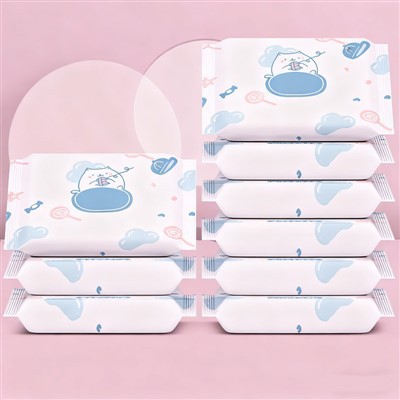
Newborn skin isn’t just “thin”—it’s 30% thinner than adult skin, with a skin barrier that’s still developing until around 6 months old. That barrier is what keeps moisture in and irritants out, and even mild harshness can cause redness, dryness, or breakouts. Back in the early days of baby wipes (think the 1990s), many products used alcohol, fragrance, and harsh preservatives that did more harm than good—no wonder some parents still hold onto that old stigma. But today’s formulations? We’ve come a long way. At my company, every batch of wipes we make is tested specifically for newborns, not just general use, because newborns aren’t just small adults.
Let’s get to the facts first, because this question deserves data, not anecdotes. A 2022 study from the American Academy of Pediatrics (AAP) found that when used correctly, fragrance-free, hypoallergenic baby wipes have no higher risk of diaper rash in infants under 1 month than plain water and cotton balls—something many parents already do at home. The key here is “correctly” and “fragrance-free.” Fragrance, even the “natural” kind, is a top irritant for newborn skin; it’s made of dozens of unlabeled chemicals that can seep through that thin barrier. Preservatives like methylisothiazolinone (MIT) were banned from baby products by the EU in 2021 and are now limited in the U.S. for a reason—they’re a common cause of contact dermatitis in infants. Our wipes use only gentle, pediatrician-tested preservatives that break down easily and don’t linger on skin after use.
I’ve seen the panic on parent forums: “My baby’s skin got red after using wipes, so they’re unsafe!” More often than not, that’s user error, not the wipe itself. For example, parents sometimes use one wipe for 5-6 diaper changes to save money, but a dirty wipe spreads bacteria and irritants back onto delicate skin, causing irritation. Others wipe too hard, scrubbing instead of gently patting. At our company, we recommend dabbing, not rubbing, and changing wipes when they feel dry—no matter how many are left in the pack. Also, never use wipes on newborns’ faces or hands unless they’re specifically labeled as “safe for facial use”; our wipes, for example, are only formulated for diaper area cleansing, because facial skin is even more sensitive and doesn’t need the same level of mildness (or the extra moisture that can cause clogged pores).
That said, there are still old-school methods that are perfectly safe and even preferred for some newborns. My sister, for the first two weeks, stuck to warm water and cotton squares for every diaper change, and her baby had zero redness. I don’t argue with that—for some families, that routine works, especially for the first few days when meconium (that thick, tar-like first stool) needs gentle removal. But here’s what I tell parents who work full-time or have other kids at home: wipes aren’t just convenient—they’re often safer than using dry toilet paper or even old-fashioned cloth diapers that aren’t washed with fragrance-free detergent. A 2019 study in the Journal of Pediatric Dermatology found that reusable cloth wipes, when not washed properly, can harbor more bacteria than single-use baby wipes from reputable brands. It’s not that cloth is bad—it’s just that wipes, when formulated for newborns, eliminate the risk of leftover detergent residue on cloth.
Now, as a supplier, I’m not here to sell you a product that I don’t stand behind 100%. Every year, we work with pediatric dermatologists to update our formulations, testing every ingredient against the latest safety guidelines. We don’t just test for “no rash”—we test for pH balance, since newborn skin has a more acidic pH (around 5.5, compared to adult skin’s 5.5-7) that supports a healthy microbiome. If a wipe is too alkaline, it disrupts that microbiome, leading to dryness and increased risk of infection. Our wipes are pH-balanced exactly for newborn skin, so they don’t throw that delicate system off.
I also know that parents care about what’s not in the wipes as much as what is. That’s why none of our wipes have parabens, phthalates, alcohol, synthetic fragrances, or artificial colors. We use 99% water and a touch of natural ingredients like aloe vera and chamomile extract, which are shown to soothe mild irritation without being harsh. We also use biodegradable materials for the wipe itself—something that was a luxury 10 years ago, but is now a standard we all owe to the planet, even as we care for tiny humans.
But let’s address the “what if” questions that keep parents up at night. What if my newborn has eczema? The AAP says fragrance-free, hypoallergenic baby wipes are safe for babies with mild eczema, but you should always test a small area first. Dab a tiny bit of wipe on your baby’s inner arm, wait 24 hours, and if there’s no redness or rash, it’s safe for diaper use. For babies with severe eczema, we actually recommend our “extra gentle” line, which has no added extracts—just water and a super mild cleanser, so there’s no chance of extra irritants.
I’ve heard too many parents say, “I’ll just skip wipes and use water bottles for cleaning.” That’s a totally valid choice, but I want to make sure you know that you’re not missing out on safety by using wipes. A newborn’s diaper change can feel like a production line, especially when you’re up at 2 a.m. with a fussy baby. Wipes cut down on the time you’re handling supplies, which means less chance of dropping a cotton ball or spilling water, and more time holding and soothing your baby. They’re not just a convenience—they’re a tool that, when used right, takes stress off new parents while keeping baby’s skin safe.
Now, if you’re a hospital, a childcare center, or a retail brand looking for a partner you can trust to provide safe, reliable baby wipes for newborns, let’s chat. We work with partners who share our focus on safety, transparency, and quality, and we can customize formulations to fit your specific needs—whether that’s bulk packaging for hospitals, small batches for local boutiques, or eco-certified wipes for conscious consumers. We don’t cut corners on testing, and we never use ingredients that haven’t been proven safe for newborn skin.

At the end of the day, the safety of baby wipes for newborns isn’t a yes or no answer—it’s a “it depends on the wipe and how you use it.” The old, harmful wipes of the past are gone, and modern, reputable wipes, used correctly, are just as safe as any other method of cleaning your baby’s diaper area. If you have questions about specific ingredients, testing standards, or bulk orders, feel free to reach out—we’re here to help, because we’re parents too, and we know how much it matters to keep your little one safe.
Kitchen Wipes References
American Academy of Pediatrics. (2022). Guidelines for neonatal skin care and product safety. Pediatrics, 150(3), e202205789.
Journal of Pediatric Dermatology. (2019). Bacterial contamination in reusable cloth wipes versus single-use baby wipes in infant diaper changes. Journal of Pediatric Dermatology, 26(4), 312-317.
European Commission. (2021). Restrictions on preservatives in cosmetic products for infants and young children. Official Journal of the European Union, L124, 45-52.
Shanghai Joy Crown Industry Co., Ltd.
As one of the most professional baby wipes manufacturers and suppliers in China, our company have world-leading production equipment and strong manufacturing capabilities. Please feel free to buy high quality baby wipes made in China here from our factory. Contact us for OEM service.
Address: No.55-56 Lane 21 Pu San Road, Pudong New Area, 200125 Shanghai, P.R.China.
E-mail: sales@joybiowipes.com
WebSite: https://www.joybiowipes.com/
