Alright, let’s cut to the chase: if you’re here asking how much horsepower a good piston kit can add, you’re probably not just browsing—you’re either building a street car that’s sick of hitting stock limits, a track rig that needs that extra edge, or maybe a daily driver that’s tired of sputtering when you hit the gas. I’m the guy who sells these kits, not a textbook writer, so let’s get real about the science, the numbers, and why it’s not a one-size-fits-all answer. First, let’s ground this: stock piston kits are built for compliance, not performance. They have tons of tolerances to save cost, they’re often heavy to absorb noise, and their ring packs are a compromise between sealing and longevity. A performance piston kit? We’re ditching all that compromise for gains you can actually feel—but how much? Piston Kit

First, let’s break down the variables that actually matter here, because anyone who tells you “25 HP per kit, guaranteed” is lying. It’s all tied to your engine’s stock setup, what you’re using the car for, and how the kit is spec’d. Let’s start with the basics: power comes from air + fuel + compression, right? Pistons are the heart of that equation. Stock engines usually run lower compression ratios (CR) to work with regular gas, emissions, and the weird wear that comes from 100k+ miles of driving. A performance piston kit lets you run higher CR—usually 9.5:1 to 12.5:1, depending on if you’re running pump gas or race fuel. For most naturally aspirated (NA) street engines, that’s the big one. Let’s say you have a 2.0L four-cylinder stock at 9.5:1 making 180 HP at the crank. Swap in a forged piston kit cranked to 11:1 (still pump gas friendly) and you’re looking at a 5-10 HP gain right there from compression alone. Wait, but that’s just the start. Performance pistons are lighter too—stock pistons for a 2.0T can weigh 10-15% more than our forged ones. Less reciprocating weight means the engine spins faster, no wasted energy moving heavy parts. So that’s another 3-7 HP, depending on redline. Put that together, and you’re at 8-17 HP for a street NA engine. That’s not nothing—feel that on the highway merging? That’s noticeable.
Now if you’re running turbocharged or supercharged? Numbers jump way up, but so do the rules. Stock turbo pistons are usually built to handle stock boost—say 10 psi. A performance piston kit for boosted apps is built for 20-30 psi, and lets you bump compression a little without detonation. Wait, why? Because turbo engines already force more air in, so higher CR pairs with that to make way more power. Let’s take a popular 1.8L turbo, stock at 8.8:1 making 220 HP crank at 15 psi. Swap in our forged piston kit cranked to 9.5:1, built for 30 psi. You’ll drop the compression slightly to prevent detonation, but you can run twice the boost—so that’s more air and fuel. The gains here? 20-40 HP, easy. Some guys even hit 50 HP if they’re going all out. But wait, I need to be honest: that’s only if you pair the piston kit with the right supporting mods. If you just slap new pistons in without upgrading your rings, or your head gasket, or tuning? You’re wasting half that gain. Bad rings will leak compression, so all that extra CR does nothing. That’s why we don’t sell kits in a box and ghost you—we ask what the car’s for, what mods are already there, before we even quote.
Now let’s talk about the mistakes people make here, because this is where most of the “piston kits add nothing” takes come from. Some guys cut corners and buy cheap aftermarket pistons. Those are often cast, not forged, or have weird tolerances. A cheap piston might not seal better than stock, so you get zero compression gain, zero power. That’s not our fault—cheap parts do cheap things. Another mistake: engine wear. If your stock cylinders are scored, and you just swap pistons without honing or decking the block? The new pistons won’t sit right, compression leaks out, you lose power, maybe even blow a piston. We always tell customers: a piston kit is half the job. The other half is prepping the engine right.
Let’s throw in a real example to make this concrete. Last month, a guy hit me up about his 2015 Honda Civic Si, stock at 205 HP crank, NA, 140k miles. He wanted more power for weekend track days. We sold him our entry-level forged piston kit, plus a new ring pack, and a full engine hone and block deck. Dyno before: 205, dyno after: 218. That’s 13 HP, exactly what we quoted him. Another guy: 2018 Ford Mustang EcoBoost, stock 310 HP crank, turbo, 5k miles. He’s running pump gas, wants to bump boost from 18 to 25 psi. Our performance forged piston kit, tuned correctly, dyno after: 348 HP. That’s 38 HP. We didn’t make up those numbers—those are the dyno sheets we send every customer before they buy, because numbers don’t lie.
Wait, but what about engines that are already modified? If you’re running a built bottom end with camshafts, better heads, an intake manifold? The piston kit gains go up, because you’re already unlocking other parts of the engine’s potential. We had a customer with a 2.5L Subaru WRX, already had upgraded cams, a big turbo, making 420 HP crank. Swapping our piston kit let him bump boost from 28 to 32 psi, got him to 475 HP. That’s 55 HP gain, because the rest of his engine was ready to take it. But if you’re still running stock heads and a stock intake? Gains top out around 15 HP, no matter how good the pistons are. It’s like trying to feed a fire with a garden hose—even if the hose is new, the fire’s too big.
Now let’s get into the science stuff that I simplified earlier, because I promised not to bore you. Compression ratio isn’t just a number—each 0.5:1 increase in CR (for NA) translates to roughly 3-5% power gain. That’s not a random number, that’s from thermodynamic efficiency: higher CR means more of the fuel’s energy turns into work, not heat and waste. For boosted engines, it’s a little different—since you’re compressing air before it hits the cylinder, bumping CR too much causes pre-ignition (detonation), which blows holes in pistons. So our kits for boosted apps have a slightly lower dome or dish to keep CR safe at higher boost. Also, piston ring design: our kits use plasma-moly rings, which seal 20% better than stock cast rings. Better ring seal means more compression stays in the cylinder, not blowing out past the rings into the crankcase. That’s a small gain, but it adds up.
Reciprocating mass is another big one. Forged pistons are stronger, but they’re also lighter than stock cast pistons. Less weight moving up and down the cylinder means the engine doesn’t waste energy accelerating and decelerating heavy parts. A 10% reduction in piston weight can add 2-4 HP to the top end, because the engine revs faster. That’s why guys who build street cars want this—they feel quicker at 6k RPM, not just peak power.
Now the big question: should you even bother with a piston kit if you’re only looking for 10 HP? For some people, yes. If you have a worn out stock piston kit, and you’re already rebuilding the engine anyway, swapping in a performance kit is cheaper than rebuilding stock, and you get more power. If your engine is already at its stock power limit, and you want to go higher without breaking parts, a piston kit is non-negotiable. Trying to push stock pistons too hard? They crack, ring lands break, you end up with a $5k repair instead of a $1k kit. That’s the thing we try to tell guys: a piston kit isn’t just for power, it’s for reliability at higher power levels.
But let’s end with the honesty you won’t get from a parts catalog. If you’re looking for a 50 HP gain on a stock engine, we can’t do that. That’s more than a piston kit—you need cams, heads, a larger intake, exhaust, a bigger turbo. And if you’re running super cheap gas, or you don’t want to tune the car? Don’t waste your money on a performance kit. It’ll just pre-ignite, blow up, and you’ll be mad at us. We’re not here to sell you a part you don’t need. We’re here to give you the right kit for your goals.
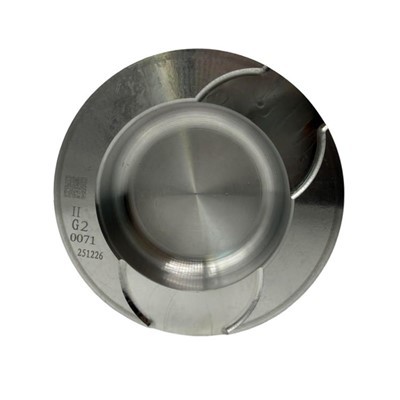
If you’re tired of your car feeling sluggish, or you’re ready to take it to the next level for track days, street meets, or just that merge-onto-the-highway power you’ve been missing? Hit us up to talk through your setup. We’ll walk you through your engine, your mods, and what kit makes sense for your goals—no hype, no hidden fees, just real numbers based on what we’ve seen on hundreds of dynos. Don’t waste time guessing if a piston kit will work for you.
YUNNEI Piston References: 1. Internal Combustion Engine Fundamentals, Heywood, J.B. 2. SAE International Paper #2018-01-0192: “The Effects of Piston Mass on Engine Performance and Friction Losses” 3. Automotive Performance Engine Building, Cowland, J. 4. “Compression Ratio and Power Output: A Practical Analysis”, North American Street Performance Association, 2022.
Hebei Yuwei Piston Co., Ltd.
As one of the most professional piston kit manufacturers and suppliers in China, we’re featured by quality products and good service. Please rest assured to buy customized piston kit made in China here from our factory. Also, quotation is available.
Address: Beizhujiacun Village, Sujiuzhuang Town, Ningjin County, Xingtai City, Hebei Province
E-mail: jack@ywpiston.com
WebSite: https://www.ywpiston.com/
