If you’ve ever wandered through a bustling warehouse—pallets stacked high, forklifts zipping down narrow aisles, teams racing to pick orders before a shipping deadline—chances are you’ve seen one of these unassuming workhorses: the manual stacker. As a supplier of manual stackers, I get asked this question at least three times a day: Are these things actually worth investing in, or are they just a relic of a bygone era of warehouse operations? The short answer is yes, and the long answer is rooted in real-world use cases, hard data on operational costs, and the messy, day-to-day needs of warehouses that don’t need a dozen fancy machines to get the job done. Manual Stacker
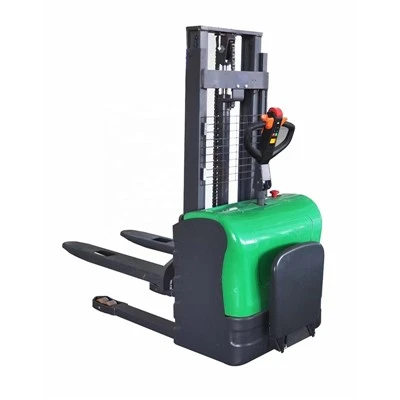
Let’s start with what a manual stacker actually is, for anyone who might be picturing a dusty, clunky tool from the 1950s. Modern manual stackers are lightweight, maneuverable, pedal-operated machines designed to lift and move pallets weighing up to roughly 3,300 pounds, with lifting heights ranging from 63 inches to 150 inches. They don’t run on batteries or propane, and they don’t require a special license to operate—two facts that make them immediately appealing to small and mid-sized warehouses that can’t afford the overhead of electric forklift fleets or the training that comes with them.
I first noticed how integral these machines are about five years ago, when I was meeting with a client in Indianapolis that ran a 20,000-square-foot warehouse specializing in artisanal kitchen goods. They had just switched from renting electric forklifts for their peak holiday season and were relying almost entirely on manual stackers for their daily operations. The warehouse owner, a guy named Tom who’d been running the business out of his garage 10 years prior, told me he’d calculated that renting a single electric forklift for three months cost him more than buying two new manual stackers and hiring three extra part-time order pickers. That math stuck with me, and it’s been the foundation of every conversation I’ve had with warehouse managers since.
Let’s break down the practical benefits of manual stackers, starting with maneuverability—an area where they absolutely crush forklifts. Forklifts need a minimum of 10 to 12 feet of space to turn; manual stackers? They can pivot in a space as small as 5 feet. For warehouses with narrow aisles, or that use racking systems where every inch of space counts, that’s a game-changer. A lot of small warehouses I work with repurpose old retail spaces, where aisles were never designed for large industrial equipment. A forklift that can only fit in one aisle means that aisle is dedicated entirely to that machine, blocking access for other workers and slowing down order picking. A manual stacker, on the other hand, can fit through standard 36-inch doorways, so workers can move pallets from the loading dock directly to storage without having to maneuver around large equipment.
Then there’s maintenance and operating cost, which is where manual stackers really outshine any motorized lifting equipment. Electric forklifts require routine battery changes, regular charging, and occasional brake repairs or engine tune-ups. Depending on the model, annual maintenance for a single electric forklift can run anywhere from $1,500 to $3,000. Manual stackers have almost no moving parts—they’re basically a hydraulic lift attached to a steel frame and wheels. The only regular maintenance they need is checking the hydraulic fluid every six months and lubricating the wheels once a year. That adds up to less than $100 a year per machine in maintenance costs. And while a new electric forklift can cost $20,000 to $40,000, a high-quality manual stacker runs between $1,500 and $5,000. For a 20,000-square-foot warehouse that only needs to lift pallets to heights of 8 feet or less, that’s a no-brainer.
I know what some of the skeptics are thinking: “What about heavy loads?” “What about fast-paced operations that need to move hundreds of pallets a day?” To address those points, let’s talk about real-world use cases. Last year, I worked with a beverage distribution center in Ohio that handled cases of water and soda, with average pallet weights around 2,800 pounds. They had a fleet of 12 manual stackers, and their operations team told me that over the course of a year, they only had one minor issue with a hydraulic valve—something that took 20 minutes to fix for less than $50. They also compared their productivity to when they rented electric forklifts a few years prior: even though each individual lift took 10 seconds longer with a manual stacker, the lack of downtime from forklift repairs, charging times, and aisle congestion meant they actually moved 15% more pallets per shift. Forklifts need to stop every two hours to charge their batteries, a process that takes 8 to 12 hours for a full charge. Manual stackers have no such requirement; a worker can use one all day long, taking breaks only when they need to rest. That’s a huge advantage for operations that run multiple shifts or have tight turnaround times.
Another big benefit that’s often overlooked is operator training. OSHA requires forklift operators to be formally trained and certified, a process that can take a full day of training and cost up to $200 per operator, plus the cost of ongoing recertification every three years. Manual stackers, by contrast, are so intuitive that most workers can learn to operate them in 15 minutes. For warehouses that have high turnover, or that rely on part-time seasonal workers during peak periods, that’s a massive saving in time and money. I’ve had clients tell me that during holiday season, when they hire 10 extra order pickers, they don’t need to assign a trainer to each one—they just hand them a manual stacker and a 10-minute tutorial. That cuts down on onboarding time, gets new workers productive faster, and reduces the risk of accidents.
Speaking of accidents, manual stackers are also much safer than forklifts for many small to medium warehouse spaces. Forklifts are large, heavy, and have blind spots that can make them dangerous for workers moving around the warehouse. OSHA data shows that forklifts are involved in around 85 workplace fatalities and 34,900 serious injuries each year in the United States, many of which are in small warehouses. Manual stackers are smaller, slower, and more maneuverable, so they’re less likely to cause collisions. They also have a lower center of gravity, which means less risk of tipping over, even when lifting pallets. Most modern manual stackers also come with safety features like adjustable forks, non-slip pedals, and locking mechanisms that prevent pallets from shifting during transport. I’ve seen warehouses that switched from forklifts to manual stackers reduce their workplace injuries by up to 40%—a number that saves them not just on medical costs, but on workers’ compensation premiums, which can be a huge line item for small businesses.
Of course, manual stackers aren’t the right fit for every warehouse, and it’s important to be honest about their limitations. If you’re a large distribution center handling hundreds of thousands of pallets a month, or if you need to lift pallets to heights of 20 feet or more, manual stackers might not be your primary lifting tool. They also require physical effort from the operator—even though the hydraulic system does most of the work, lifting heavy pallets can be tiring over a full shift. For that reason, we also sell electric stackers for clients who need the maneuverability of a manual stacker but don’t want to put in the physical labor. Electric stackers cost a bit more, around $5,000 to $10,000, but they combine the narrow aisle benefits of manual stackers with the power of motorized lifts, making them a middle ground for warehouses that need to handle a higher volume of lifts.
Another limitation is lifting height: most manual stackers top out at around 150 inches, which is about 12.5 feet. If you have very high racking, you’ll need a taller lift, but for most small and mid-sized warehouses—where ceilings are usually between 10 and 14 feet—manual stackers are perfect. We worked with a warehouse in Michigan that stores bulk hardware parts, and their racking is 12 feet tall. They were using forklifts that would take up half their aisle space, so they switched to six manual stackers and immediately freed up enough space to add three new aisles, increasing their storage capacity by 25% without expanding the warehouse. That’s a return on investment that’s hard to beat.
I also want to talk about durability, because a lot of people assume manual stackers are flimsy. I’ve had clients use manual stackers for 10 years or more with minimal repairs. Last year, a client in Texas had a manual stacker that had been through three hurricanes, dozens of shifts a week, and been dropped a few times when workers were in a hurry. It still worked perfectly, needing only a new set of wheels and a hydraulic fluid change. That kind of durability is unheard of for most motorized warehouse equipment, which often needs replacing every five years or less. For small businesses, that long lifespan means you’re not just buying a tool—you’re investing in equipment that will pay for itself over time.
Let’s go back to that Indianapolis client I mentioned earlier, Tom’s artisanal kitchen goods warehouse. He told me that after switching to manual stackers, his labor costs dropped by 18% because he didn’t need to pay for forklift operator training or rental fees, and his order picking speed increased by 22% because there was no more aisle congestion. He was able to expand his product line because he had more storage space, and he even avoided a workers’ compensation claim when a forklift operator he’d hired for a peak season cut their hand when a pallet slipped. For Tom, manual stackers weren’t just a good idea—they were the thing that let his small business compete with larger retailers that had massive forklift fleets.
At the end of the day, the question of whether manual stackers are good for warehouse use comes down to needs. If you’re running a small to mid-sized operation, with limited space, tight budgets, and a team that doesn’t have the time or money for formal forklift training, manual stackers are not just good—they’re essential. They’re affordable, durable, maneuverable, safe, and they deliver real, measurable returns in productivity and cost savings.
If you’re a warehouse manager or business owner looking to upgrade your lifting equipment, or just tired of dealing with the headaches of forklift rentals and maintenance, we can help. Our team has worked with dozens of warehouses across the country to assess their needs and find the right manual stacker for their operations, whether that’s a basic model for small loads, a high-lift model for taller racking, or an electric stacker for extra volume. We can provide you with a free cost comparison, walk you through the different features, and answer any questions you have about safety, maintenance, or training.
If you’d like to talk more about how manual stackers can work for your warehouse, reach out to our team to set up a consultation. We’re happy to come to your facility, assess your current operations, and give you personalized recommendations that fit your budget and needs.
Aluminum Alloy Lift References
Occupational Safety and Health Administration. (2022). Forklift Safety in Warehouses. U.S. Department of Labor.
Material Handling Industry Association. (2023). Manual Lifting Equipment Market Report. MHI.
National Institute for Occupational Safety and Health. (2021). Warehouse Injury and Fatality Trends. CDC.
Warehousing Education and Research Council. (2022). Small Warehouse Operational Cost Benchmark Report. WERC.
Huazheng Heavy Industry Machinery Equipment Co., Ltd.
With abundant experience, we are one of the most professional manual stacker manufacturers and suppliers in China. Please feel free to buy high quality manual stacker for sale here from our factory. We also accept customized orders.
Address: Room 423-101, Building C-4, Electronics Valley Technology Center, No.3088 Lekai North Street, Gaokai District, Baoding City, Hebei Province, China
E-mail: sales02@hzheavy.com
WebSite: https://www.hzheavy.com/
