If you’ve ever stood in the middle of a home renovation or commercial build, staring at a bucket of joint compound, a stack of drywall sheets, and a box of materials you’d never heard of a week ago, chances are you’ve encountered interior wall fiberglass mesh—even if you didn’t know its name. As a supplier of this material, I’ve spent the last 12 years walking job sites, talking to contractors, and answering every question from how to hang it correctly to why it’s worth the small extra cost over paper tape. Let’s break down exactly what interior wall fiberglass mesh is used for, because it’s not just a random roll of fine glass fibers; it’s one of the most underrated workhorses in interior construction. Interior Wall Fiberglass Mesh
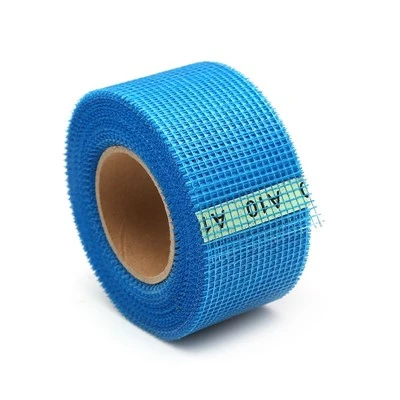
First, let’s set the scene: When you install drywall (or plasterboard, as some call it), the seams between sheets, the corners where two walls meet, and the spots where outlets or light switches cut into the wall are all weak points. If you skip reinforcing these areas, you’re asking for trouble down the line. Paper joint tape has been the go-to for decades, but it has flaws: it absorbs moisture from joint compound, leading to warping, and it’s prone to cracking along high-traffic corners where someone might bump a vacuum or a chair. That’s where fiberglass mesh steps in. Unlike paper, it’s alkali-resistant—meaning it doesn’t break down when mixed with the cement-based joint compounds used in modern interior finishes—and its woven structure distributes stress evenly, which is key for preventing cracks.
The most common use, and the one that gets mentioned most often, is reinforcing drywall seams. Let’s get specific here: When a drywall installer finishes hanging sheets, they fill the ¼-inch gaps between panels with joint compound (usually a setting-type compound for seams, to speed up drying), then press the fiberglass mesh into the wet compound. The mesh acts as a tensile bridge, connecting the two adjacent drywall sheets so that when the wall shifts slightly (think of a building settling over time, or even a temperature change that makes the drywall expand and contract), there’s no gap or tension that would cause a crack to form. I’ve seen first-hand what happens when a team skips mesh here: a year after a kitchen reno, the seam above the counter cracks because constant temperature swings from the oven and dishwasher caused stress the paper tape couldn’t handle. Fiberglass mesh eliminates that, because its woven structure is flexible but strong enough to hold.
Next up is interior corner reinforcement, the 90-degree corners that run from the floor to the ceiling in every room. For years, contractors used metal corner beads, but those can be tricky to work with on curved corners or in tight spaces, and they’re more prone to dents if someone drops a tool or a toy. Fiberglass corner mesh—sometimes called self-adhesive corner tape—solves this. It’s a strip of fiberglass mesh with a bend down the middle that fits perfectly into the corner, and when you press it into joint compound, it creates a seamless, crack-resistant corner. What I love most about this use case is how it works for both straight and slightly curved corners, like in a custom nursery or a boutique with rounded interior walls. We supply a 50-yard roll of self-adhesive corner mesh specifically for this, and last quarter a contractor told us he used it to finish a 12-foot curved wall in a coffee shop, and there hasn’t been a single crack in six months—something he couldn’t pull off with metal beads.
Another big use is repairing damaged interior walls. Not every interior wall is brand new—landlords, handymen, and homeowners regularly patch holes from doorknobs, moving furniture, or water damage, and fiberglass mesh is the best tool for long-lasting repairs. If you’ve ever patched a hole and had the patch crack a month later, it’s probably because you didn’t use mesh to reinforce the edge of the patch. Let’s say you have a 2-inch hole in a drywall wall; you cut a new piece of drywall to fit, attach it to the studs with screws, then cut a piece of fiberglass mesh larger than the patch, press it into the joint compound around the new drywall, and finish it with two more coats of compound. The mesh ties the patch to the existing wall, so when the wall expands and contracts, the stress is shared between the old and new material, not just concentrated at the edge of the patch. I get calls every week from DIYers who tried paper tape for a patch, had it crack, and went to the local hardware store asking for mesh—those are the moments I’m grateful this material exists.
Wait, we can’t forget about interior plaster and skim coating projects, either. Plaster has been making a comeback in residential builds, and many professional plasterers prefer fiberglass mesh over natural fiber tapes for their work. When you skim coat a drywall wall to create a smooth, uniform finish (popular for modern minimalist interiors), the mesh is used to reinforce the entire wall in some cases, or to cover any minor seams or imperfections before applying the skim coat. Plaster is a rigid material, and when it cures, it can develop small surface cracks if there’s underlying movement. Fiberglass mesh adds flexibility to the plaster layer, preventing those unsightly cracks from showing up in a wall that’s supposed to be flawless. I work with a team of custom plasterers in Chicago who insist on our 160-mesh weight roll for all their projects, because it’s fine enough to be hidden under a skim coat, but strong enough to keep the plaster intact for decades.
There’s also a less talked-about use for interior walls: soundproofing assemblies. For multi-unit residential buildings, office spaces, or home theaters, interior walls need to reduce noise transfer, and fiberglass mesh plays a small but important role here. When building acoustic walls, installers use resilient channels to separate the drywall from the studs, and fiberglass mesh is used in the seams to keep the joint compound from cracking between the drywall and the channels. The tensile strength of the mesh helps maintain the integrity of the joint, which is critical because any crack in the joint can become a pathway for sound to travel through. I learned this when a developer in Brooklyn called us a few years ago, saying their soundproof wall project was failing inspections because of crack-related sound leakage. We switched them to our 180-mesh alkali-resistant mesh, and they passed their next inspection on the first try—proof that even a small material choice can have a big impact on building performance.
Now, let’s address a common misconception: Some people think all fiberglass mesh is the same, but that’s not true. Interior wall fiberglass mesh is specifically formulated with alkali-resistant glass fibers, which means it won’t degrade when exposed to the Portland cement in joint compounds, skim coats, or plaster. Exterior mesh is designed to hold up to weather, but it’s too thick and stiff for interior finishes, and non-alkali-resistant mesh will break down, leading to cracks and peeling. As a supplier, we test every roll we send out to make sure it meets ASTM standards for alkali resistance, because there’s nothing worse than a contractor telling me a mesh we sent cracked halfway through a job due to poor quality.
So why does all this matter? At the end of the day, interior wall fiberglass mesh is about durability and peace of mind. When a homeowner moves into a new build, they don’t want to be touching up cracks in the walls every year. When a contractor finishes a job, they want to stand behind their work, knowing the walls will look good for 10, 20, even 50 years. When a landlord rents out an apartment, they want repairs to last between tenants, so they don’t have to spend money on touch-ups every six months.

If you’re a contractor working on a new build, a handyman patching up a rental, a DIYer finishing a basement, or a developer designing a multi-unit building, and you’re looking for high-quality interior wall fiberglass mesh that meets industry standards, please reach out to our team to discuss your project needs. We offer different mesh weights and roll sizes for every job, from small DIY repairs to large commercial builds, and we’re happy to share best practices for installation too.
Fiberglass Tissue References
- “ASTM C1274 – Standard Specification for Alkali-Resistant Glass Fiber Mesh for Use in Portland Cement Mortar and Concrete.” ASTM International, 2022.
- Drywall Finishing Best Practices: Seam Reinforcement and Crack Prevention. The National Association of Home Builders, 2021.
- Interior Plaster and Lath: Materials and Installation Guidelines. Plasterers’ Educational Association, 2020.
- Acoustic Wall Construction for Residential and Commercial Buildings. Building Science Corporation, 2019.
Danyang Yonggu Building Materials Co., Ltd.
As one of the most professional interior wall fiberglass mesh manufacturers and suppliers in China, we have world-leading production equipment and strong manufacturing capabilities. Please feel free to wholesale customized interior wall fiberglass mesh made in China here from our factory. For price consultation, contact us.
Address: Danyang City, Jiangsu Province, P.R. China
E-mail: sales02@cnyongu.com
WebSite: https://www.ygfiberglasses.com/
