What is a Multi-Tool Facing Head? Let’s Break This Down Like We Talk Shop Over Coffee Facing Head
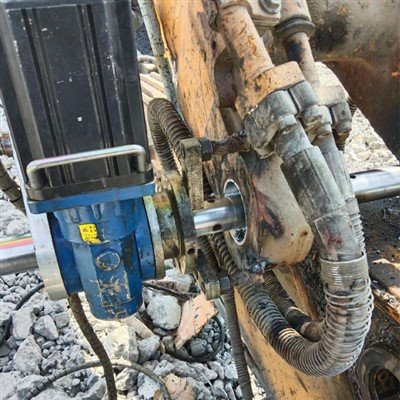
If you’ve ever wandered around a machine shop, stared at a milling machine or lathe setup, and thought “wait, how do they do all those cuts without switching out a dozen tools?” you’re not alone. I’ve been selling facing heads for 8 years, and even my regular shop buddies still sometimes ask, “What’s a multi-tool facing head, and why should I care about it instead of my old single-point facing tool?” Let’s cut the jargon and explain this stuff like it is—no stuffy engineering manuals, just real talk from someone who’s seen them work (and work) on job sites every week.
First, let’s start with the basics: a facing head, period. Facing is that machining step where you flat the end of a part, make a precise shoulder, or even mill a big flat surface on the side of a component. If you’re making a flange for a pipe, for example, you need that face dead flat so the seal doesn’t leak. A basic single-tool facing head will hold one cutter, so you crank the head to feed it across the part, then spin it around to the edge, maybe adjust the tool offset, and do another pass. That works… for small jobs. But what if you’ve got a 20-inch diameter valve housing? Or you have to mill 4 different flats in one setup? That’s where the multi-tool version comes in.
At its core, a multi-tool facing head is a modular machining attachment that mounts to the spindle of your mill or lathe—and instead of 1 or 2 cutters, it has 3, 4, even 6 individual tool stations, all adjustable independently. Each station can hold a different type of cutter: face mills, boring bars, thread chasers, even grooving tools. The magic here is that you don’t have to stop the machine, swap tools, recalibrate offsets, and re-clamp the part every time you need a different cut. That’s hours saved on big jobs, and way less room for human error (trust me, I’ve seen a machinist fumble a tool swap and drop a $500 cutter into a chip bucket—no one wants that).
Let’s get into how it actually works, because this isn’t some fancy space tech. When it mounts to your machine spindle, the head spins at whatever speed your machine runs. Each tool sits in a calibrated slide, so you can dial in how far it sticks out from the center line (that’s called tool offset, by the way, and it’s the thing that lets you get a perfect diameter or flat surface). For example, if I’m machining a 16-inch flange, I can set 3 cutters on the head: one to rough-face the bulk of the material, one to finish-face it to a dead smoothness, and a third to cut the bolt circle holes’ outer edge. All three are set to the right depth before I even start the job. I hit go, and the head feeds across the part once, and boom—three cuts done in one pass, instead of three separate setups. That’s the kind of efficiency that makes job bosses lean in and listen when you pitch it.
Now, let’s talk about when you’d actually want one, because not every shop needs a multi-tool facing head. If you’re only doing small, one-off parts, like a few 2-inch brackets, a single-tool head is totally fine. But if you’re running high-volume jobs, like pipe flanges, pump housings, or even automotive engine components (think: cylinder heads, those need super precise faces), this thing is a game-changer. Let me give you a real example: last year, a customer of mine made a living machining custom valve parts for natural gas pipelines. They were using single-tool heads before, and each flange job took them 45 minutes—swap tools, re-clamp, adjust offsets, repeat. After they bought a 4-station multi-tool facing head, their job time dropped to 18 minutes per flange. That’s a 60% reduction in setup time. For 100 flanges a week, that’s almost 12 extra hours a week they can use to take on more jobs instead of tinkering with tool swaps.
Another big win: precision. When you swap tools manually, you risk messing up the offset. If your cutter sticks out 0.002 inches too much, that’s a bad face, maybe a part that gets rejected. The multi-tool’s stations are factory-calibrated, and you can adjust each cutter with a tiny digital gauge (most modern ones have that now) so your offsets are accurate to within 0.001 inches. I’ve had machinists tell me they stopped having 20% part rejection rates after switching to these—because no more human tool swap mistakes. That adds up to less wasted material, too, which is a huge win when steel and aluminum are pricey these days.
Wait, but let’s not sugarcoat it—there are things to look out for, because not all multi-tool facing heads are equal. A lot of cheap knockoffs online have flimsy tool stations that wobble when you crank the machine. If your cutter wobbles, your face won’t be flat, no matter how good your setup is. So when you’re picking one, make sure it’s made from solid steel, not cast iron (cast iron can warp after a few months of heavy use). The slides for the tools should be dovetailed, not just bolted on—dovetails keep the cutter locked in tight, no wiggle. Also, check the range of offsets: if you only need to machine up to 12 inches, a head that does 18 is fine, but you don’t want to pay extra for a range you’ll never use.
And here’s a thing I tell every new customer: you don’t have to go all-in on the fanciest model right away. Start with a 3-station head if you’re testing the waters. A lot of people think multi-tool means expensive, but when you factor in the time you save and the fewer rejected parts, it pays for itself in 3 to 6 months for most shops. I’ve had a 2-student shop buy one on a trial basis, and they were hooked after their first big job—no more staying late every night to finish orders.
Let’s also clear up a common myth: people confuse multi-tool facing heads with turret tools or other multi-tool setups. Turrets are for turning lathes, right? They hold tools that rotate around the spindle, but they’re limited to turning operations. A facing head works for both mills and lathes, and it’s designed specifically for facing operations—so you get a tool angle that’s perfect for flat cuts, not the angled cuts turret tools are for. Another myth: “I can just use a boring head instead.” Boring heads are great for holes, but they only have one tool. You can’t face a surface and bore a hole in the same setup with a boring head. Multi-tool facing heads do both, and more.
So, who’s this for? Let’s nail it down. If you’re a job shop doing custom parts, a production shop running high-volume similar parts, or even a small maintenance shop that needs to machine large components on-site (think: fixing a broken pump housing on a factory floor, instead of taking it to a machine shop 2 hours away), this is the tool for you. I’ve even seen people use them for agricultural parts—farmers machining tractor parts out in the field, cutting down on downtime when equipment breaks harvest season. That’s the cool thing about these things; they’re not just for big factories.
Now, let’s talk about how they fit into your existing setup. Most multi-tool facing heads mount to standard machine spindles—you don’t need to rewire your mill or buy a whole new machine. That’s another big plus: you can add this to your existing equipment without a huge investment. If you have a 3-axis mill or a engine lathe from the last 10 years, chances are a head will fit right on there. I usually tell people to check their spindle taper—most are ISO 40 or CAT 40, which is the standard for most mid-sized machines, and the heads I sell are designed for that.
Wait, let’s go back to that example I mentioned earlier. The valve customer: before they got the multi-tool head, they had 2 machinists working 8 hours a day just machining flanges. After, they had one machinist running two heads at once, so they doubled their output with the same labor. That’s the kind of impact these tools have. It’s not just about making a single cut faster; it’s about reallocating your labor to other jobs, which is how small shops grow.
Now, the real question: should you get one? If you’re tired of tool swaps, tired of rejected parts, or tired of staying late to make deadlines, yeah, definitely. But if you only do 1 or 2 big facing jobs a month, maybe stick with a single-tool head. No need to spend money on something you won’t use. The key is to match the head to your actual workload, not what you think you might need.
And here’s a tip from someone who’s been around the block: when you buy one, ask about add-ons. Some heads come with extra tool stations, different cutter holders, even digital offset displays. The digital displays are a game-changer—instead of guessing how much to adjust the tool, you type in the diameter you want, and it tells you exactly how much to move the cutter. No more tiny measuring mistakes with a caliper.
Let’s wrap this up plain and simple. A multi-tool facing head isn’t some mysterious industrial gadget. It’s a tool that lets you do multiple cuts in one setup, save time, reduce errors, and get consistent precision on your parts. It’s not for every shop, but for most shops that do regular facing work, it’s one of the best upgrades you can make.
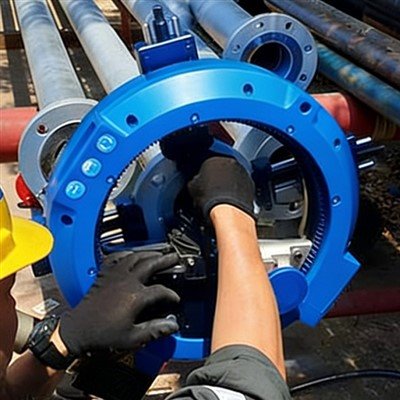
If you’re tired of the hassle of single-tool setups, or you want to cut your job times and reject rates, reach out to me to talk through what you need. No pushy sales pitch, just real talk about what will work for your shop. Whether you’re machining small brackets or big valve housings, I can help you find the right multi-tool facing head for your machines and your budget.
Portable Milling References
Machinery’s Handbook, 31st Edition, Industrial Press Inc.
Modern Machine Shop, "Facing Head Technology for High-Volume Machining", 2022
ISO 40 Spindle Taper Standards, International Organization for Standardization, ISO 736:2019
Shangqiu JDA Machinery Technology Co., Ltd.
As one of the most professional facing head manufacturers and suppliers in China, our products have good reputation in the market. Please rest assured to buy cheap facing head for sale here from our factory. Quality products and reasonable price are available.
Address: No.55 Pingyuan Middle Road, Liangyuan District, Shangqiu, Henan, China
E-mail: sales@jdamachines.com
WebSite: https://www.jda-machines.com/
