Hey there! I’m a supplier of Pu panels, and I often get asked about how to test the quality of these panels. Pu, or polyurethane, panels are super popular for all sorts of applications, like insulation in buildings, cold storage units, and even some industrial settings. So, getting the quality right is a big deal. In this blog, I’m gonna walk you through some key ways to test the quality of a Pu panel. Pu Panel

Density Test
First up, let’s talk about density. Density is a crucial factor in determining the quality of a Pu panel. A panel with the right density will have better insulation properties, more strength, and longer durability.
To test the density, you’ll need a few tools: a scale and a measuring device, like a ruler. First, measure the length, width, and thickness of the panel to get its volume. You can use the formula Volume = Length x Width x Thickness. Make sure to measure in the same units, like centimeters or inches.
Once you’ve got the volume, weigh the panel using the scale. Then, calculate the density by dividing the weight by the volume (Density = Weight / Volume). The unit of density will depend on the units you used for weight and volume. For example, if you measured weight in grams and volume in cubic centimeters, the density will be in grams per cubic centimeter (g/cm³).
For a good – quality Pu panel, the density should fall within a certain range. Usually, the density for insulation panels is around 30 – 50 kg/m³. If the density is too low, the panel might not be strong enough or have good insulation. If it’s too high, it could be more expensive and might not be necessary for your application.
Compression Test
Another important test is the compression test. This test helps you figure out how much pressure the Pu panel can handle before it starts to deform.
To do a simple compression test, you can use a compression testing machine if you have one. If not, you can use some heavy weights and a flat surface. Place the panel on the flat surface and start adding weights evenly on top of it. Keep adding weights slowly and observe how the panel behaves.
As you increase the pressure, note the point at which the panel starts to show visible signs of deformation, like cracking or flattening. The amount of pressure at this point is called the compressive strength.
A high – quality Pu panel should have a decent compressive strength. The required strength depends on the application. For example, if the panel is going to be used in a floor where there will be heavy foot traffic or equipment, it needs to have a higher compressive strength compared to a panel used in a wall insulation.
Thermal Conductivity Test
Thermal conductivity is a measure of how well a material transfers heat. For a Pu panel, low thermal conductivity means better insulation.
There are specialized devices to measure thermal conductivity, like a heat flow meter. But if you don’t have one, you can do a simple comparative test. Take two panels, one of the Pu panel you’re testing and another panel of a known good – quality insulation material.
Place both panels between two surfaces with a temperature difference. For example, you can place them between a warm surface and a cold surface. Then, measure the temperature on the other side of each panel after a certain period of time.
If the Pu panel has a lower temperature on the cold – side surface compared to the other panel, it means it has better insulation properties and lower thermal conductivity.
Adhesion Test
In many cases, Pu panels are made by bonding different layers together. So, it’s important to test the adhesion between these layers.
One way to do this is the cross – hatch test. Use a sharp blade to make a series of parallel cuts in the panel, about 1 – 2 mm apart. Then, make another set of parallel cuts perpendicular to the first set, creating a cross – hatch pattern.
Apply a piece of adhesive tape over the cross – hatched area and press it firmly. Then, quickly pull the tape off at a 90 – degree angle. If a large amount of the panel material comes off with the tape, it indicates poor adhesion.
Good adhesion is essential for the long – term performance of the panel. If the layers separate, it can reduce the insulation and structural integrity of the panel.
Flammability Test
Safety is a huge concern, especially when it comes to building materials. So, testing the flammability of a Pu panel is important.
There are standard flammability tests like the ASTM E84 test in the United States. In a basic setup, you can expose a small sample of the panel to an open flame for a short period. Observe how quickly the panel catches fire, how fast the flame spreads, and if it self – extinguishes.
High – quality Pu panels are often treated with fire – retardant chemicals to meet safety standards. A good panel should have a low flammability rating, meaning it doesn’t catch fire easily and doesn’t spread flames rapidly.
Moisture Resistance Test
Moisture can cause a lot of problems for Pu panels, like reducing their insulation properties and promoting the growth of mold.
To test moisture resistance, you can place a small sample of the panel in a high – humidity environment for a period of time. You can use a humidity chamber or just place it in a bathroom with the shower running to create a humid environment.
After a few days, check the panel for signs of moisture absorption, like swelling or a change in color. You can also weigh the panel before and after the test. If there’s a significant increase in weight, it means the panel has absorbed a lot of moisture.
A good – quality Pu panel should have good moisture resistance to ensure long – term performance, especially in environments where there’s a lot of moisture, like in cold storage units or basements.
Sound Insulation Test
For some applications, like in studio buildings or areas where noise reduction is important, sound insulation is a key factor.
You can do a simple sound insulation test by setting up a sound source on one side of the panel and a sound meter on the other side. Play a constant sound through the source and measure the sound level on the other side of the panel.
Compare the sound level on the other side of the panel with the sound level without the panel in place. The difference in sound levels indicates the sound insulation performance of the panel.
A high – quality Pu panel can significantly reduce sound transmission, making it ideal for noise – sensitive environments.
Visual Inspection
Don’t forget about the good old visual inspection. Look at the surface of the panel for any visible defects, like cracks, bubbles, or unevenness. A smooth and uniform surface is usually a sign of a well – manufactured panel.
Check the edges of the panel as well. They should be straight and clean. Any rough or damaged edges can affect the installation and performance of the panel.
In conclusion, testing the quality of a Pu panel involves a combination of tests, from density and compression to flammability and visual inspection. By doing these tests, you can ensure that you’re getting a high – quality panel that meets your specific needs.
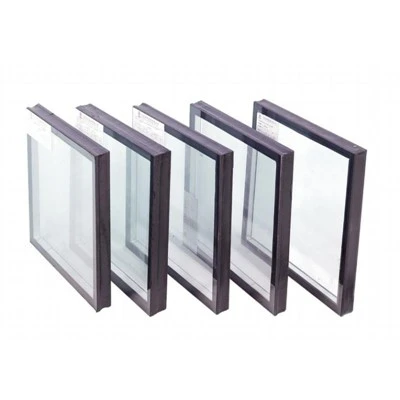
If you’re in the market for some top – notch Pu panels, I’d love to have a chat with you. Whether you have questions about the panels, need customized solutions, or want to discuss pricing and orders, just reach out. I’m here to help you make the best choice for your project.
Outside Mount Glass Door References
- ASTM International Standards for Building Materials Testing
- Technical literature on Polyurethane Panels from industry associations
Coste Glass Door Co., Ltd.
As one of the most professional pu panel manufacturers and suppliers in China, we’re featured by quality products and good price. Please feel free to wholesale bulk pu panel in stock here and get quotation from our factory. Customized orders are welcome.
Address: 41/47, VILLAGE NO.5 KHOK KRABUE SUBDISTRICT MUEANG SAMUT SAKHON DISTRICT ,SAMUT SAKHON PROVINCE 74000 ,Thailand
E-mail: Alicezhou@shhag.com
WebSite: https://www.costeglassdoor.com/
