Hey everyone, it’s Jake here, and today I wanna cut through all the noise around integrated home ESS (Energy Storage Systems) because let’s be real—most of the stuff online is either so jargon-heavy it makes your head hurt, or it’s just a sales pitch from some random company trying to lowball you. As someone who’s been in the game for 6 years building and installing these exact systems, I’m gonna break down exactly what goes into the installation costs—no hidden fees, no weird fine print, just real numbers and real context you can actually use. Integrated Home ESS
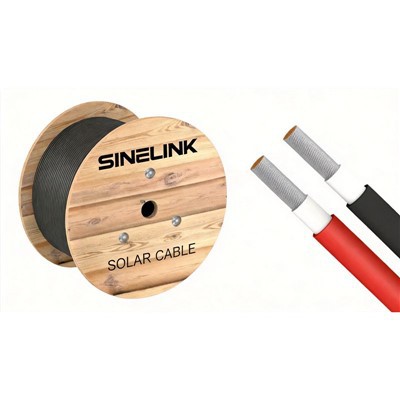
First, let’s get one thing straight: an integrated home ESS isn’t just a battery you plop in your garage. It’s a whole system that works with your solar panels (or can work without ’em, if that’s your jam), your electrical panel, your appliances, and even your grid connection to cut down on energy bills and keep the lights on when the grid goes out. So when we talk about installation costs, we’re not just charging for the battery itself—we’re charging for the parts that make it integrated, and the labor to make sure it’s safe and actually works for your home.
Let’s start with the baseline, because that’s what most folks wanna know first. For a standard 10kWh integrated ESS (that’s enough to power your fridge, lights, WiFi, and a couple small appliances overnight), the total installed cost right now hovers between $8,500 and $12,000. Wait, I know that’s a wide range—so let’s talk about what makes that range, because that’s the part no one tells you. If you’re a seasoned DIYer, maybe you could cut costs, but trust me, I’ve seen too many DIY installs go sideways because they skipped a step that could’ve started a fire (no exaggeration—last year a homeowner tried hooking up a battery to their old panel and melted a wire, costing ’em $3k in repairs on top of the battery). So we’re talking professional install here, full stop.
Now, break down that $8.5k to $12k. About 40% of it is the actual ESS hardware—so the battery modules, the inverter (super important, because this turns the DC power from the battery into AC power your house uses), and the system’s brain (the controller that manages when to draw from the grid, the solar, or the battery). That part is pretty standard across reputable brands, but some companies use cheaper inverters to cut costs, and those tend to break in 2-3 years vs. 10-15 for the good stuff. We use mid-tier inverters that have a 10-year warranty, so that bumps the hardware cost a little, but it saves you headaches later.
Next, the other big chunk—labor and onsite mods, that’s about 35% of the total cost. This is where most hidden fees pop up if you’re not working with a real installer. Let’s say you have a standard 200-amp electrical panel. If it’s new enough (less than 10 years old) and has space for a breaker, we can usually tap straight into it, no mods needed. But if your panel is old, has corroded wiring, or is only 100 amps? We’ll have to upgrade the panel or run new dedicated wiring to the ESS. That can add $1,000 to $2,500 right there. I had a customer last year with a panel from 1982 that only had 100 amps—we had to replace the whole panel, which pushed his total cost from $9,200 to $11,100, and that was with no other surprises. Also, don’t forget permits! Most counties and cities require a building permit and an electrical permit for ESS installs, and those run $200 to $600, depending on where you live. A lot of cut-rate installers skip this to quote a lower price, but if you do that and the city finds out, you could get a fine up to $2,000, plus they might not let you sell your house later because the electrical work isn’t permitted. Worth paying for the permit, trust me.
Then there’s the little stuff that adds up, what I call “peripheral parts”—that’s about 15% of the cost. Things like conduit to run the wiring, disconnect switches (super important for safety, so you can turn the system off if you need to work on it), surge protectors, and mounting hardware if you’re putting the ESS indoors or outdoors. Most integrated ESS are designed for indoor garage or basement installs, but if you wanna put it outside, you’ll need a weatherproof enclosure that adds $300 to $700. Also, if you’re pairing the ESS with new solar panels, that changes things—we can integrate the ESS with existing solar, but if you’re adding new panels, that’s an extra cost (usually $2,000 to $4,000 for a 6-panel system) that some people roll into the total installation.
Wait, but what if you don’t have solar? A lot of folks wanna get an ESS just to avoid high grid prices, not because they have solar. Can you do that? Absolutely, and the installation cost is basically the same, unless you need extra wiring to hook up the ESS to your main electrical line. No solar required for that part.
Now, let’s talk about variables that can make the cost go up or down, because every home is different. First, the size of the ESS. A 15kWh system will cost $11,000 to $15,000 installed, and a 20kWh is $13,000 to $18,000. That makes sense—more battery power means more modules, bigger inverter, heavier mounting hardware. Another variable: your location. If you live in a rural area where it takes the installer an extra hour or two to get to your house, you might pay a $200 to $500 travel fee. I’m in Ohio, and we cover a 50-mile radius, so we never charge travel, but if you’re in a big city like LA or New York, labor rates are way higher—installers there charge $120 to $150 an hour vs. $80 to $100 in the Midwest, so that can add $1,000 to $2,000 to the total cost. Also, incentive programs! A lot of states and utilities offer tax credits or rebates for home ESS. The federal IRA (Inflation Reduction Act) gives a 30% tax credit for residential energy storage systems, no cap, right now through 2032. That can knock $2,500 to $5,400 off your total cost, depending on the system size. I had a customer in Texas last year with a 10kWh system, total installed was $9,800, and he got $2,940 back from the IRA, so his net cost was $6,860. That’s a huge difference, and most installers will help you apply for the credit, but always double-check with your local utility too—some offer extra rebates.
Wait, I know what some of you are thinking: “Can I get a cheaper integrated ESS by buying off-brand batteries?” Let me tell you, I’ve seen off-brand ESS that cost $5,000 installed, but they have a 2-year warranty, no tech support, and I’ve had to come out to fix 3 of those in the last year because the batteries overcharged and tripped the house’s main breaker. Integrated ESS is not like a lawnmower—you can’t just swap parts when something breaks, because all the components are programmed to work together. A reputable integrated system has a warranty that covers the whole package, not just the battery, so if the inverter goes bad, you don’t have to wait for a part from China, you call us and we fix it. That’s worth the extra $2,000 to $3,000 up front, trust me.
Now, let’s talk about what the installation process actually looks like, because that’s part of the cost too—we don’t just show up and plug stuff in. First, we do a free home assessment: we check your electrical panel, ask about your energy usage (how much you use per month, if you have any big appliances like an EV charger), figure out what size ESS you need, and give you a custom quote with no hidden fees. Then, we pull the permits (we handle all that paperwork for you, so you don’t have to deal with the city). The installation usually takes 1 to 2 days, depending on how much onsite work we have. On day one, we run the wiring, install the disconnect switch, and mount the system. On day two, we connect it to your panel, test every single component (we do at least 5 hours of load testing to make sure it works with your fridge, AC, WiFi, everything), and walk you through how to use it—like how to set it to charge off-peak when grid rates are low, or how to switch to backup power if the grid goes out. We also do a 1-year checkup for free, just to make sure everything’s working right.
A common question I get: is there any ongoing cost? Not really, other than regular maintenance, which is just a yearly checkup (usually $150 to $250, if you don’t get the free one) and replacing the battery after 10 to 15 years. The inverter usually lasts 10 to 12 years too, and that’s covered under warranty for the first 10 years, so you don’t have to pay for that replacement out of pocket.
Let’s wrap this up with real numbers to make it concrete. If you’re in the Midwest, have a 10-year-old 200-amp panel, no travel fees, and take the federal tax credit, here’s the math: total installed cost for a 10kWh integrated ESS is ~$9,000. Minus 30% federal credit = ~$6,300. If you add a $500 weatherproof enclosure for outdoor install, that’s ~$6,800. If your panel needs an upgrade, add $1,500, so total is ~$7,850 after credit. That’s way cheaper than most people think, especially when you calculate the savings on grid bills—most homeowners save $1,000 to $1,500 a year on energy, so the system pays for itself in 5 to 7 years.
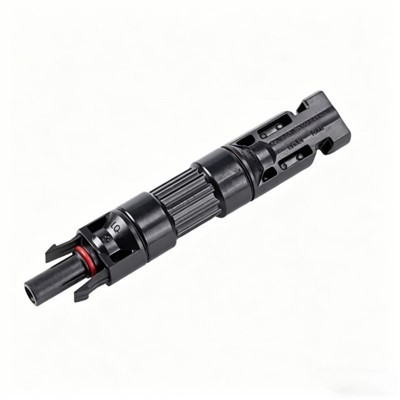
If you’re ready to stop overpaying for electricity and get reliable backup power, we can help you find the right system for your home, no pressure, no sales gimmicks. Just reach out to us to set up a free assessment, and we’ll give you a personalized quote that’s transparent, no hidden fees.
Solar Connector References:
- U.S. Department of Energy. (2024). Home Energy Storage Systems: Costs and Incentives.
- International Code Council. (2023). Electrical Safety Standards for Residential Energy Storage Installations.
- EnergySage. (2024). Residential Energy Storage Installation Cost Report.
Tianjin Xilingke New Energy Technology Co., Ltd.
Address: Suite 2601, Tower B, Wanghai International, Haihe East Road, Hebei District, Tianjin, China.
E-mail: robin@sinelinkev.com
WebSite: https://www.sinelinkenergy.com/
