If you’ve ever stood on a manufacturing floor at 2 a.m., watching a $50,000 pneumatic stalling mid-cycle because of a tiny, invisible moisture bubble, you know how much goes on behind the scenes to keep operations running. For 12 years, I’ve worked as a technical sales lead for a desiccant air dryer supplier, and one question I get asked at least three times a week—from plant maintenance managers to factory engineers—is a simple one: What is the actual purpose of a desiccant air dryer in a pneumatic system? Most people will rattle off a basic line about “removing water,” but that’s like saying a seatbelt’s purpose is “to keep you safe.” It’s true, but it misses the dozens of quiet, expensive failures that dryers prevent. Today, I want to break this down not just with engineering specs, but with the real-world problems I’ve seen dryers solve over thousands of customer sites. Desiccant Air Dryer

First, let’s ground this in how pneumatic systems work, because you can’t fix a problem if you don’t see where it starts. Pneumatic systems run on compressed air—air that’s been squeezed down to a fraction of its original volume to power everything from assembly line grippers to paint sprayers to conveyor belt actuators. But here’s the thing: when you compress air, it gets hot, and warm air holds a lot of moisture, same as summer humidity holding dew. Even if you pull air in from the cleanest, driest sky, compressing it by 10:1 or more will push that moisture out as liquid water and water vapor. That moisture doesn’t just float around; it travels through your steel pipes, mixes with dust and oil from compressor lubrication, and turns into a gritty, corrosive sludge.
Now, let’s talk about what happens if you let that sludge and vapor get where it’s not supposed to go. Take a customer I had last year: a small automotive parts plant in Detroit that makes brake calipers. For six months, their assembly line grippers were sticking at random, ruining 2% of their daily output, costing them $12,000 a week in scrapped parts. The maintenance team replaced the grippers three times, blamed bad wiring, even brought in a robotics specialist—no one thought to check the air dryer. When we tested their un-dried compressed air, we found 400 parts per million (ppm) of water vapor, which is enough to create a thin layer of ice inside the gripper valves when the line runs 24/7 in Michigan’s winter. That ice and sludge made the valves seize, and the line shut down. We installed a heatless desiccant dryer sized specifically for their 50-horsepower compressor, and the sticking stopped within 48 hours. The plant cut their scrapped parts by 98% in a month. That’s the core, unglamorous purpose of a desiccant dryer: it removes that moisture before it causes cascading, avoidable failures.
But there’s more to it than just avoiding breakdowns. Let’s talk about component lifespan. Pneumatic tools and valves aren’t cheap. A single directional control valve for a packaging line can cost $800, and a large actuator for a mining conveyor is $5,000. Water in compressed air causes two types of wear: corrosion and particle contamination. When water mixes with compressor oil, it forms a mild acid that eats through steel pipes and valve internals. I’ve seen a 6-inch steel pneumatic pipe corrode through from the inside in 18 months, because the plant had a faulty refrigerated dryer that only removed 70% of moisture, leaving the rest to sit in lines. Instead of replacing 10 valves a year, like that plant was doing, switching to a desiccant dryer cut their valve replacements to one. That’s $7,200 a year in savings, just from not buying and installing new valves. And for plants with high-cycle pneumatic systems—think 10,000 operations an hour—even a tiny amount of water doubles the wear rate on moving parts. A desiccant dryer reduces that moisture to levels as low as 1 ppm, which is dry enough to slow corrosion to almost nothing.
Then there’s the quality side, which is make-or-break for industries that rely on clean, consistent air. Take a food and beverage customer in Ohio that uses pneumatic sprayers to apply non-stick coating to baking pans. Before they installed a desiccant dryer, the moisture in their compressed air caused the coating to bead unevenly, leading to pan rejects that cost them $15,000 a month. The sprayer’s nozzle would clog with water-borne sludge mid-shift, so operators had to stop every two hours to clean it. Once we set up their desiccant dryer to deliver pressure dew points of -40°F (that’s a technical term meaning the air won’t condense into liquid at temperatures down to that level), the coating became consistent, the nozzle clogs stopped, and their rejects dropped to less than 0.5%. For food processing, where even a tiny amount of moisture can create a breeding ground for mold or bacteria, this isn’t just about quality—it’s about regulatory compliance. OSHA and the FDA both require compressed air used in food contact to be free of excessive moisture and contaminants, and desiccant dryers are the only reliable way to meet those standards for many applications.
Another common myth I hear: “Refrigerated dryers do the same thing as desiccant dryers, right?” No, and that’s a critical distinction. Refrigerated dryers cool compressed air to around 38°F, which causes most moisture to condense out, but they can only get the air so dry. They work great for low-demand systems in moderate temperatures, but if you need air that’s dry enough for cold environments, high-cycle machinery, or sensitive processes, they fall short. I had a customer in Canada that runs a pneumatic freeze dryer for pharmaceutical vials. Last winter, their refrigerated dryer couldn’t keep up with the -20°F warehouse temperature, so water vapor in the pneumatic lines turned into ice plugs that shut down production for 12 hours, delaying a batch of drugs worth $200,000. Swapping their refrigerated dryer for a desiccant dryer with a pressure dew point of -70°F fixed that entirely. Desiccant dryers use porous materials—like silica gel or activated alumina—to absorb water vapor, similar to how a sponge soaks up water. That means they can deliver much drier air, even when the surrounding temperature drops, making them non-negotiable for systems that operate in cold climates, or for any application where consistent dryness matters.
Now, let’s talk about energy efficiency, which is a big concern for almost every plant manager these days. A lot of people assume desiccant dryers use more energy than other types, but that’s not always the case—especially when sized and installed correctly. For example, heatless desiccant dryers (the most common type for mid-sized systems) use a small portion of the dried air to regenerate the desiccant, but modern models do this with a purge control valve that adjusts based on demand, so you’re not wasting air when your system isn’t running at full capacity. I worked with a plastic injection molding plant in Texas that was running a 100-horsepower compressor, and their old desiccant dryer was using 18% of the compressed air to regenerate. We replaced it with a high-efficiency heatless desiccant dryer that only uses 8% purge air, and their energy bill for the entire pneumatic system dropped by $4,200 a year. That’s the thing about desiccant dryers: when you pick the right one for your system, it doesn’t just prevent failures—it saves you money on energy, parts, and labor.
I want to be clear, though: a desiccant air dryer isn’t a one-size-fits-all tool. Too many plants buy the smallest dryer they can find to save money, and that ends up costing them more in the long run. Last year, a small woodworking shop in Georgia called me because their pneumatic nail guns were leaking air at a rate that was wasting $300 a month in compressed air. They’d bought a cheap desiccant dryer online that was too small for their 20-horsepower compressor, so it couldn’t keep up with their three-shift operation, leaving the air too moist. We matched them with a dryer sized for their actual load, and the air leaks stopped within a week. The key here is that the purpose of a desiccant dryer isn’t just to dry air—it’s to dry air specifically for your pneumatic system’s needs. A bakery needs a dryer that meets FDA standards; a construction company needs one that can handle dust and high humidity; a pharmaceutical plant needs one that delivers ultra-dry air for sensitive processes.
At the end of the day, I’ve sat through so many meetings where engineers focus on the compressor, the valves, the tools, and forget that the air powering all of it is the most critical component. Moisture is the silent enemy in pneumatic systems—it doesn’t make noise, it doesn’t flash red on a control panel, but it adds up to thousands of dollars in wasted parts, scrapped product, and downtime every year. I’ve seen plants shut down for days because of a moisture-related failure that could have been prevented by a properly sized desiccant air dryer. I’ve seen product quality jump by 90% after installing one, and I’ve seen maintenance teams stop working 10 extra hours a week replacing worn-out valves and tools.
If you’re reading this and wondering whether your pneumatic system is set up right, or if you’re tired of dealing with random stalling, rejected parts, or extra maintenance work, let’s talk. I’ve spent 12 years working with plants across every industry, from small machine shops to large automotive and manufacturing facilities, and I can help you figure out exactly what kind of desiccant air dryer your system needs, no hard sales pitches, no hidden fees—just real, practical advice based on what I’ve seen work (and what hasn’t) over thousands of sites.
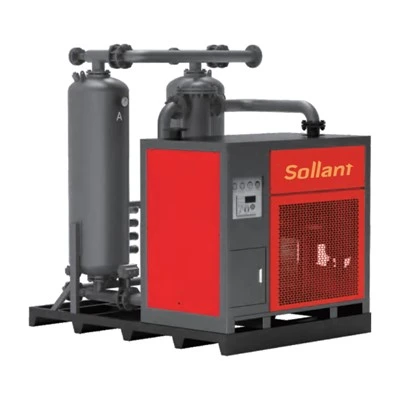
To learn more about the role desiccant air dryers play in pneumatic systems, or to connect on your specific application, reach out to our team for a consultation. We’re here to help you cut costs, reduce downtime, and keep your pneumatic system running reliably.
Combined Dryer References
- Compressed Air and Gas Handbook. Compressed Air and Gas Association, 2021.
- Pneumatic Systems Design and Maintenance. Society of Manufacturing Engineers, 2019.
- Pressure Dew Point Guidelines for Industrial Compressed Air. International Organization for Standardization (ISO) 8573-1, 2022.
- Desiccant Air Dryer Selection and Application Guide. Air Treatment Equipment Manufacturers Association, 2020.
Shanghai Sollant Energy Saving Technology Co., Ltd.
As one of the most professional desiccant air dryer manufacturers and suppliers in China, we’re featured by quality products and good service. We warmly welcome you to buy bulk advanced desiccant air dryer from our factory. If you have any enquiry about cooperation, please feel free to email us.
Address: No.215, Songri Center, Beihongqiao, Jiading District, Shanghai, China
E-mail: info4@sollant.com
WebSite: https://www.sollanttreatment.com/
