If you’ve ever driven past a construction site for a new office park, a housing development, or even a small industrial factory, you’ve probably seen one of these big, boxy, standalone units sitting off to the side, away from the main building. Most people glance at it and think “that’s just a power box, right?” But if you’re in the market for reliable, quick electrical solutions, that thing is what we at our prefabricated substation company build—and it’s way more important (and way more customizable) than you might guess. Prefabricated Substation
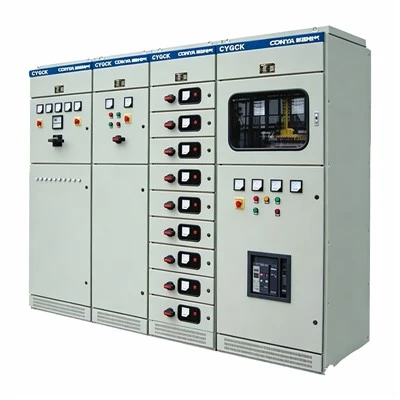
Let’s start with the basics, no confusing jargon: a prefabricated substation (sometimes called a “prefab substation” or even a “packaged substation”) is a complete, fully assembled electrical power center that’s built in a factory, not on-site at the project. Unlike traditional substations, which are made of separate components (transformers, switchgear, distribution panels, wiring, all that stuff) hauled to a site and bolted together over weeks or months, this thing leaves the factory already put together, tested, and ready to drop into place and hook up to power lines. For anyone who’s ever dealt with construction delays, that’s a game-changer.
I know what you’re thinking: why go through the trouble of building a whole unit in a factory when you could just put parts together on-site? Let me break down the perks that make prefab substations the go-to for most projects these days. First, speed. When you’re building a new retail center or a housing development, time is money. A traditional substation can take 6 to 8 weeks just to assemble on-site, plus another 2 to 3 weeks for inspections and testing. Our prefab units? We build them in a controlled factory environment, so no delays from bad weather (rain doesn’t stop a factory line, trust me) or missing parts (we check every component twice before they leave). Most of our standard prefab substations can be shipped to the site in 2 weeks, set up and hooked up in a day, and ready to power the whole project in less than a week. That’s a huge difference—especially for developers who are eager to open doors and start making money.
Then there’s consistency. When you build something on-site, even the most skilled electricians are working in variable conditions. Humidity, dust, limited space, last-minute changes to wiring? All of that can lead to small mistakes that cause big problems down the line. In a factory, though, every prefab substation is built to strict, repeatable specs. We use the same high-quality components every time, and our technicians run full tests (like voltage checks, load tests, and safety inspections) before the unit leaves our facility. That means no last-minute fixes, no hidden issues, and a safety record that’s way better than custom-built substations.
And let’s not forget space. A traditional substation takes up a lot of room—you need separate spots for the transformer, the switchgear, and all the wiring, plus space for workers to move around. A prefabricated substation is a compact, all-in-one unit. We can design it to fit even small plots, which is perfect for urban projects where land is expensive and every square foot counts. Whether you need a unit for a small coffee shop or a 10-story office building, we can adjust the size to fit.
Now, let’s talk about what actually goes inside a prefab substation, because it’s not just a metal box with wires. Every unit has four core parts, and we build each one to fit the exact needs of the client. First, the transformer—this is the heart of the substation. It takes high-voltage power from the main utility lines (the stuff that’s way too dangerous to plug into a building directly) and steps it down to lower, safe voltage that buildings can use. Second, switchgear: this is the system that controls and protects the power. It lets you turn power on or off, and stops electrical surges that could fry your building’s equipment. Third, distribution panels: these split the power from the transformer into different circuits for different parts of the building. Fourth, the enclosure: the metal (or sometimes fiberglass) box that holds all these parts. We make enclosures to withstand whatever the location throws at them—heavy rain, snow, extreme heat, even salt air for coastal projects. No rust, no leaks, no issues with the elements.
Wait, let’s make this real. Last year, we worked with a developer building a 50-unit apartment complex in a busy part of Phoenix. They were on a tight deadline—they had to have the power up in 10 days to avoid paying daily penalties to the city. A traditional substation would have taken 6 weeks, which would have cost them tens of thousands of dollars. We built a custom prefab substation in 10 days, shipped it to the site, and had it hooked up in 2 hours. That’s the kind of difference we make.
Of course, not all prefab substations are the same. There are a few main types, depending on what you need. Let’s keep this simple:
- Compact prefab substations: These are the small ones, perfect for small commercial jobs, residential neighborhoods, or temporary power (like for a construction site while a building is being built). They’re lightweight, easy to move, and super quick to set up.
- Medium prefab substations: For mid-sized projects, like shopping centers, small factories, or 50+ unit apartments. They have a bit more capacity, and we can add extra features like backup generators or smart meters.
- Large prefab substations: These are the big boys, for hospitals, large office parks, or industrial facilities. They can handle thousands of kilowatts of power, and we build them to be extra sturdy for heavy use.
We also do custom builds, if someone has a very specific need. For example, a data center might need a prefab substation with redundant power systems (so if one part fails, another takes over immediately). Or a school might need a unit that’s quiet, so it doesn’t disturb classrooms. No matter what, we can tailor the unit to fit your project.
Now, let’s address the questions we get all the time, because people have a lot of myths about prefab substations. First myth: “They’re only for temporary use.” Nope. We have prefab substations that have been running for 20+ years at permanent sites. They’re built to last, just like traditional substations. Second myth: “They’re less flexible than custom ones.” Wrong. We can modify prefab substations after they’re installed too—if your project needs more power a few years down the line, we can upgrade the unit without replacing the whole thing. Third myth: “They’re cheaper than custom substations.” Actually, upfront, they might be a tiny bit more expensive, but when you factor in the time saved (no penalties for delays, no extra labor costs for on-site assembly), they end up being way cheaper in the long run. Plus, fewer maintenance issues means lower costs over the life of the unit.
That’s another big point: maintenance. Prefabricated substations are way easier to maintain than traditional ones. Because everything is in one compact box, you don’t have to run all over the site to check parts. Our technicians can access all components from one side, so inspections take half the time. And if something does go wrong, we can often fix it without sending a team to the site—we troubleshoot over the phone, and if a part needs replacing, we can ship a new one and have it swapped in a few hours. For critical facilities like hospitals, that’s a huge deal—you can’t afford to be without power for days.
So, when should you use a prefabricated substation? Let’s list the most common scenarios: if you’re on a tight deadline, if you need a compact unit for a small site, if you want consistent, tested quality, or if you’re planning a permanent or long-term project. If you’re building something temporary, like a festival site or a temporary construction camp, we even have mobile prefab substations that you can hook up and move later.
Now, I know you’re probably wondering: how do I get one? Or how do I know what size or type I need? That’s where we come in. We don’t just sell a box and send you on your way. First, we talk to you about your project: what size building, how much power you need, where it’s located, your timeline. We’ll walk you through the options—standard vs. custom, size, features, even budget. Then we’ll design a unit that fits exactly what you need, build it in our factory, test it, ship it, and help you install it. We’re here from start to finish, not just when you click “buy.”
If you’re a developer, a general contractor, or a facility manager and you’re tired of dealing with delayed projects, unexpected costs, or unreliable power solutions, a prefabricated substation is probably the answer. We’ve worked on hundreds of projects across the country, from small retail shops to large industrial complexes, and every time we deliver on what we promise.

Ready to stop dealing with the headaches of traditional substations and get a power solution that’s fast, reliable, and built to last? Reach out to us today to talk through your project—we’ll answer all your questions, share case studies from similar jobs, and give you a custom quote tailored to your needs.
Wind Photovoltaic Combined Transformer References:
- International Electrical Commission (IEC) Standard 62271-200: High-voltage switchgear and controlgear – Part 200: AC metal-enclosed switchgear and controlgear for rated voltages above 1 kV and up to and including 52 kV
- U.S. Department of Energy (DOE) Report on Prefabricated Electrical Substations for Commercial Construction, 2021
- National Electrical Manufacturers Association (NEMA) Standard PB-2: Packaged Substations for Electric Power Distribution, 2019
- Construction Industry Institute (CII) Study on Modular and Prefabricated Construction for Electrical Infrastructure, 2022
- Prefabricated Substation Market Report, Global Industry Analysts, Inc., 2023
Shandong Xunchi Electric Co., Ltd.
Shandong Xunchi Electric Co., Ltd. is one of the most professional prefabricated substation manufacturers and suppliers in China, featured by quality products and low price. Welcome to wholesale advanced prefabricated substation made in China here and get quotation from our factory. Customized orders are welcome.
Address: No.1 East Campus of Dachi Company on the North Ring Road, Yongchang Street Office, Chengwu County, Heze City, Shandong Province, China
E-mail: sdxcdq@126.com
WebSite: https://www.china-xunchielectric.com/
