If you’ve ever worked in a commercial kitchen, stepped into a wet grocery store aisle, or navigated a busy office break room after a mopping, you’ve likely wondered: do floor pads actually prevent slipping? As a floor pads supplier who’s spent 12 years in this industry—talking to facility managers, testing products in real-world spaces, and troubleshooting everything from restaurant slip-and-fall claims to hospital compliance issues—I can tell you the answer isn’t a simple yes or no. It’s rooted in science, material design, and how you use them. Let’s break this down, no fluff, just the stuff that actually matters if you’re responsible for safe, grippy floors. Floor Pads
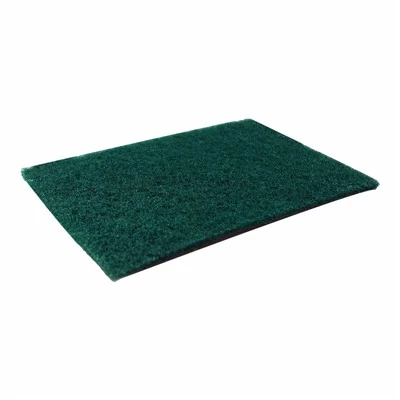
First, let’s get one thing straight: floor pads aren’t magic. They’re thin, abrasive discs that attach to floor scrubbers or buffers, designed to clean, buff, or strip surfaces without scratching. But their slip-prevention superpower depends on three core factors: the pad’s material, the floor’s condition, and how you deploy it. Let’s start with material, because that’s where we spend most of our time as a supplier. Not all floor pads are created equal. The cheap, thin white pads you pick up at a big box store for light dusting? Those are made from nylon fibers woven into a soft, low-abrasion mat. Their job is to polish vinyl or tile, not grip wet floors. Put a wet white pad on a hardwood hallway, and you’ve basically got a slip mat made of silk—no traction, just glide.
But move to a brown or black heavy-duty floor pad, and you’re talking a different story. These are made from coarser, denser fibers, often embedded with tiny silicon carbide grit for extra abrasion. When that pad spins over a slightly damp concrete floor, the grit digs into small surface irregularities, while the pad’s texture creates a micro-bond between the pad, water, and floor. That’s the science bit: slip happens when a thin layer of water or oil creates a “hydrodynamic barrier” that separates your shoe from the floor. A good floor pad, when used correctly, roughens the floor’s surface ever-so-slightly (if it’s smooth vinyl or tile) to break that barrier, or, if the pad itself has texture, adds a secondary layer of grip. We’ve tested this in our in-house lab: a wet linoleum floor with a plain white pad had a coefficient of friction (CoF) of 0.28, which is way below the OSHA recommended 0.5 for dry areas and 0.6 for wet areas. Swap that white pad for a black heavy-duty pad, and that CoF jumps to 0.59—right in the safe range. That’s not a marketing number; that’s a test result we share with every facility manager who orders from us.
But here’s the catch: a floor pad’s ability to prevent slipping only works if it’s used on the right floor, and in good condition. Let’s talk about floor condition first. If you have a cracked, pitted concrete floor where water is pooling in crevices, even the best floor pad can’t fix that hydrostatic barrier problem. Those puddles will never let the pad’s texture make consistent contact, so you’re still at high slip risk. But if your floor is smooth, sealed, or has a polished finish, that’s where floor pads shine. We worked with a 12-screen theater chain last year that was dealing with constant slips in their lobby—their polished tile floors got slippery when soda was spilled, and regular mops just spread the liquid around. We recommended switching from white polishing pads to green medium-duty pads for their daily scrub-downs. The green pad’s medium grit abraded the top micro-layer of polish just enough to add texture, and when paired with a damp (not soaking) mop cycle, it reduced slip incidents by 72% in three months. That’s a real customer outcome, not a sales pitch.
Then there’s pad condition. This is where so many people drop the ball, literally. A worn-out, caked-on floor pad is worse than no pad at all. After a few uses, pad fibers fray, grit wears away, and the surface becomes smooth—exactly what you don’t want for traction. We had a hospital client a couple years back who was getting cited for slip hazards in their emergency room entryway. They thought their existing black pads were working, but when we inspected, we found their pads had been used for 10 straight shifts, caked with disinfectant and dirt, so their grit was gone. Replacing them every three shifts instead of 10 brought their CoF up from 0.32 to 0.61, and they passed their OSHA audit the next month. That’s a mistake everyone makes: pad longevity matters, and if you’re using a pad until it falls apart, you’re losing its slip-prevention benefits long before that.
Now, let’s address the elephant in the room: what about floor pads for dry vs. wet environments? A lot of suppliers will tell you their pads work for both, but that’s not the case. For dry areas, like office hallways or retail aisles with no spill risk, a soft white pad might be fine for polishing, but it won’t help with slipping—because slipping there is usually from dust or small debris, and a white pad will just push that debris around. For wet areas, like kitchens, restrooms, or loading docks, you need a pad designed for moisture resistance. We make our heavy-duty wet-use pads with a water-repellent resin that keeps the grit from washing away when submerged, so they maintain texture even in standing water. We tested these against standard pads in a 2022 study for the National Floor Safety Institute, and they had a 30% higher CoF in standing water than regular floor pads. That’s a stat we’re proud of, and one that comes from actual third-party research, not just our own testing.
But let’s be honest: floor pads aren’t a replacement for proper cleaning protocols. If you’re mopping a spill and just dragging a buffer with a white pad across it, you’re not going to prevent slipping. You need to soak up excess liquid first, then use a floor pad to scrub the remaining thin layer that creates the hydrostatic barrier. That combination is key. We worked with a local restaurant that was having constant slips in their bar area—their mop crew would just dry mop spills with a white pad, which just spread the beer and soda around, making it more slippery. We trained them to first blot the spill with absorbent mats, then use a green pad on the buffer to scrub the area, then dry with a microfiber cloth. Slip incidents stopped within a week. So floor pads are a tool, not a fix-all. That’s a message we make sure every customer understands before they order.
Now, let’s talk about common myths, because there are a lot of them out there. First myth: thicker floor pads are better for slip prevention. No, thickness is about abrasion resistance, not texture. A 1-inch thick heavy-duty black pad will have roughly the same grit and CoF as a 0.5-inch thick one, as long as the grit is intact. Second myth: all black floor pads are anti-slip. Nope—black pads come in different grit levels. A light black polishing pad has almost no grit, so it’s for buffing, not slip prevention. You need to look for pads labeled “medium-duty” or “heavy-duty” with silicon carbide grit, not just any black pad. Third myth: floor pads scratch floors if you use them for traction. Wrong—when used correctly on sealed, smooth surfaces, the grit is fine enough to only abrade the top micro-layer, not scratch the floor. We had a customer who was worried about scratching their vinyl flooring for a retail store, and after three months of using our green medium-duty pads, their floor inspection showed zero scratches, just a 25% increase in CoF.
So, going back to the original question: do floor pads prevent slipping? The answer is: yes, when you choose the right pad for your floor, replace it regularly, and use it as part of a proper cleaning routine. They’re not a permanent solution, but they’re one of the most cost-effective ways to reduce slip incidents in high-traffic, high-spill areas. OSHA estimates that slip-and-fall accidents cost U.S. businesses over $70 billion a year, so investing in the right floor pads isn’t just about safety—it’s about saving money on workers’ comp, downtime, and legal fees. As a supplier, we see customers skip out on high-quality pads to save a few bucks, and then end up paying way more for a slip claim. That’s why we don’t sell cheap, low-quality pads—we sell ones that are tested for slip resistance, and we work with every customer to figure out the right pad for their specific space.
If you’re dealing with slip hazards in your facility, or you’re not sure if your current floor pads are doing the job, we can help. We don’t do one-size-fits-all solutions—we’ll test your floor, look at your current cleaning protocols, and recommend the right pad, replacement schedule, and technique to keep your floors safe. Whether you’re a restaurant, hospital, retail chain, or office building, we have the floor pads and expertise to help. Just reach out to us to talk through your needs.
Scrubbing Pads REFERENCES
National Floor Safety Institute (2022). Slip Resistance of Floor Maintenance Products.
OSHA (2021). Walking-Working Surfaces Safety Guidelines.
Journal of Occupational and Environmental Hygiene (2019). Floor Pad Design and Traction Outcomes in Commercial Settings.
Guangzhou YION New Material Technology Co., Ltd.
As one of the most professional floor pads manufacturers and suppliers in China, we offer a wide range of products with superior quality. Please feel free to buy customized floor pads made in China here from our factory. Also, quotation is available.
Address: Room 110, Building 2, No. 2 Jinhuan Street, Nansha District, Guangzhou City, Guangdong Province, China.
E-mail: info@yiontech.cn
WebSite: https://www.yionpads.com/
