Hey everyone, it’s Jake from your go-to bridge guardrails supplier, and today we’re diving into a question we get all the time but rarely see straightforward answers for: How do bridge guardrails actually hold up in areas with a ton of dust? If you’ve ever driven a highway that cuts through a dry, dusty valley or a road near a construction zone that’s kicking up dust nonstop, you know that fine, powdery stuff isn’t just an annoyance—it’s everywhere, and it’s gotta affect the stuff along the road, right? We’ve worked with crews in some of the dustiest spots across the US, so I’m gonna break this down like I would if I was chatting with you at a job site over a cold soda—no super fancy jargon, just real stuff we’ve seen and tested. Bridge Guardrails
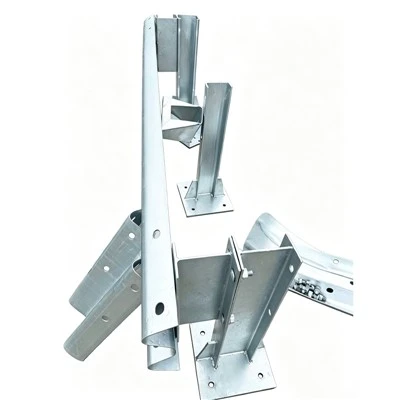
First off, let’s set the scene: what “a lot of dust” actually means for bridge guardrails. We’re not talking about a little dirt on the rail after a light rain. We’re talking about places like the Mojave Desert, where winds can blow dust so thick you can barely see the car in front of you. Or areas near active construction sites, especially big infrastructure projects like new highway expansions, where there’s dirt being dug up and moved 24/7. Or even rural roads near farm fields, where crop dust and topsoil get kicked up all growing season. All that dust isn’t just sitting on the guardrail—it’s getting into every little nook, every joint, every bolt hole. That’s where the performance stuff starts.
Let’s start with the basics of how guardrails work. Their whole job is to stop vehicles from going off the bridge, right? So their main performance metrics are: structural integrity (do they stay strong when hit), crashworthiness (do they absorb impact the right way), and corrosion resistance (do they not rust out before their time). Dust might seem harmless, but it plays into all three of these—sometimes in good ways, sometimes in bad, and it all depends on what kind of guardrail we’re talking about and how it’s installed.
First, the bad stuff dust can do. Most bridge guardrails we supply are galvanized steel—hot-dip galvanized, that’s the standard for a reason. The zinc coating is what keeps the steel from rusting, right? It’s like a protective layer. But here’s the thing: dust isn’t just inert powder. A lot of the time, it’s got tiny particles of salt, chemicals, or even moisture trapped in it. Wait, moisture? Even in dry areas, dust can hold onto humidity. When that dust gets packed into the gaps between the zinc and the steel underneath, or into bolt holes where the zinc coating got scratched during installation, it creates what’s called a “crevice corrosion” spot. We saw this a few years back on a bridge in eastern Oregon that’s surrounded by wheat farms. The guardrails there had been up for 10 years, and when we inspected them, some of the bolt areas had small rust spots—all because dust with fine soil particles had built up in the gaps, holding a little moisture that sped up rust. That’s a big deal because if rust eats through the steel, the guardrail loses its strength. We’ve also seen dust cause issues with the rail’s flexibility. Some guardrails are designed to bend on impact, right? If dust gets packed into the joints where the rail connects to the posts, it can make those joints stiff. So when a car hits, the rail doesn’t bend like it’s supposed to—instead, it might break, which is way worse for crash protection.
But wait, it’s not all bad. I know that sounds counterintuitive, but we’ve noticed a few surprising upsides. For one, dust actually acts as a temporary barrier between the steel and the sun. Wait, the sun? Yeah, a lot of people forget that UV rays can break down the zinc coating over time, especially in dry, sunny areas. If there’s a consistent layer of dust on the guardrail, it shades the zinc, slowing that UV degradation. We did a side-by-side test last year on two identical bridges in Arizona: one we kept dust-free (we had crews power-wash it every 3 months) and the other we left to collect dust naturally. After 5 years, the dust-covered one had 12% less zinc loss than the washed one. That might not sound like a lot, but it adds up over a 20-year guardrail lifespan. Another upside: dust can actually prevent minor scratches from turning into rust spots. If a guardrail has a tiny scratch during installation, a little dust can settle into that scratch, sealing it off from moisture and air before the zinc can be exposed. We saw this on a small bridge in New Mexico where the guardrails had a lot of minor installation scratches, but almost no rust—unlike a nearby bridge with the same scratches that was power-washed regularly, which had a few small rust spots.
Now, let’s talk about different types of guardrails, because not all are the same, and dust affects them differently. We supply three main types for bridges: W-beam guardrails, box beam guardrails, and stainless steel guardrails. W-beam is the most common, right? It’s that crinkly, M-shaped rail you see on most highways. For W-beam, dust is a bigger issue because it’s got more crevices and edges where dust can get packed in. The bolt holes in W-beam rails are small, so if dust builds up there, it can make it hard to tighten the bolts over time. That’s a safety thing—if bolts are loose, the rail might shift or come off during a crash. For box beam guardrails, which are thicker and have a hollow core, dust can get trapped inside the core if the ends aren’t sealed. When that dust gets wet (even from dew or light rain), it can cause corrosion from the inside out, which is way harder to spot. Stainless steel guardrails are less prone to corrosion, but dust can still be a problem if it has salt particles—salt and stainless steel don’t mix well, especially in high-traffic dust areas where salt might get tracked onto the road by cars.
So, what can we do as suppliers to make sure guardrails perform their best in dusty areas? That’s the stuff we actually care about, because it’s not just about selling a rail—it’s about making sure it keeps people safe. First, we add extra zinc coating to all our guardrails that go into dusty areas. We call it “thick-galvanized” — it’s an extra 2 to 3 ounces of zinc per square foot, so there’s more protection against crevice corrosion. Second, we pre-seal the ends of box beam rails so dust can’t get trapped inside. For W-beam rails, we add a little extra grease to bolt holes during installation, so dust can’t pack in as easily. Third, we work with contractors to set up simple maintenance plans tailored to dusty areas. We don’t recommend power-washing the rails super often—too much power can scratch the zinc coating, which makes rust more likely. Instead, we suggest a light brush-off once a year to get rid of big dust buildup, and an inspection every 2 years to check for bolt tightness and any early rust spots.
Wait, let’s get real here—no guardrail is perfect, even in the least dusty areas. But in our 15 years as a supplier, we’ve found that with the right materials, installation tweaks, and a basic maintenance plan, guardrails in super dusty areas perform almost as well as ones in mild, low-dust areas. The key isn’t to eliminate dust (that’s impossible, let’s be honest) — it’s to design the guardrail to handle dust, not fight against it.
I get it, if you’re a contractor or a DOT person, you’ve got a million things to worry about, and dust on guardrails might seem like a small detail. But we’ve seen what happens when that detail is missed: a rusted bolt hole, a rail that won’t bend on impact, and worst of all, a safety risk for drivers. That’s why we don’t just sell you a guardrail and dip—we work with you to figure out the right setup for your specific location, whether it’s a dusty desert bridge, a farm highway, or a construction zone overpass.
If you’re a project manager, contractor, or DOT rep who’s dealing with a dusty area and needs to make sure your bridge guardrails hold up, hit us up to chat. We can walk you through our custom solutions, share real data from bridges we’ve installed in similar areas, and help you put together a plan that keeps people safe for years. No sales pitch, just straight talk about what works.
Traffic Signs References:
- National Cooperative Highway Research Program (NCHRP). (2018). Performance of Highway Guardrail Systems in Corrosive Environments. Transportation Research Board.
- American Association of State Highway and Transportation Officials (AASHTO). (2020). Bridge Guardrail Maintenance Guidelines for Arid and Semi-Arid Regions. AASHTO Subcommittee on Bridges and Structures.
- Galvanizers Association. (2021). Effects of Dust and Atmospheric Particulates on Hot-Dip Galvanized Steel Durability. The Galvanizers Association International.
Guanxian Hongrong Traffic Facilities Co., Ltd.
As one of the most professional bridge guardrails manufacturers and suppliers in China, we also support customized service. Please feel free to wholesale bulk durable bridge guardrails in stock here from our factory. Welcome to contact us for quotation.
Address: South side of the road, 100 meters west of the intersection of Baiyang Road and Donghuan Road, Chongwen Subdistrict, Guan County, Liaocheng City, Shandong Province
E-mail: hongrongli568@163.com
WebSite: https://www.hongrongguardrail.com/
