If you’ve ever worked with bulk material handling—whether it’s construction aggregates, food-grade powders, chemicals, or fertilizers—you know how quickly rust, corrosion, and wear can turn a heavy-duty piece of equipment into a money pit. As a supplier of jumbo bagging machines, I get asked this question at least once a week: “What’s the anti-corrosion ability of your machines?” It’s not a trivial question either. A single corroded seal, frame component, or bag spout mount can lead to unplanned downtime, costly repairs, or even contaminated bulk materials. Let’s break this down the way I talk to my clients—no industry jargon, just real-world context, how we build our machines to stand up to harsh environments, and why that anti-corrosion stuff matters way more than you think. Jumbo Bagging Machine
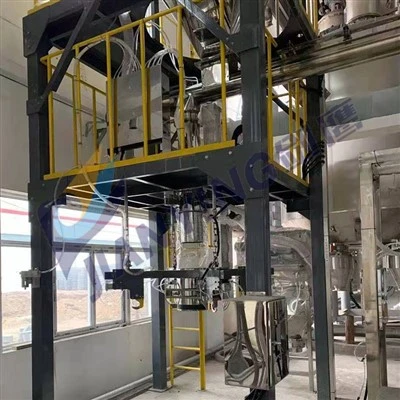
First, let’s get on the same page about what “anti-corrosion ability” actually means for a jumbo bagging machine. It’s not just about one part—it’s the sum of every design choice, material selection, and protective layer that keeps metal from breaking down when exposed to three big enemies: moisture, abrasive dust, and chemical residues. A jumbo bagging machine doesn’t operate in a lab; it runs in outdoor yards, dusty grain silos, chemical manufacturing plants, and construction sites where rain, humidity, and airborne particles are constant. Cut corners here, and your machine will be dead in 2-3 years instead of the 10-15 it should last.
Let’s start with the materials we use because that’s the foundation of anti-corrosion performance. We don’t skimp on this. The main structural frame? It’s not your run-of-the-mill mild steel. We use hot-dip galvanized steel for most structural components. Wait, let’s clarify: hot-dip galvanizing is different from the cheap spray-on zinc coatings you see on budget machines. When steel is dipped into molten zinc, it creates a metallurgical bond—not just a thin layer that chips off after a few months. That bond acts like a shield: even if the zinc gets scratched, it sacrificially corrodes instead of the underlying steel. For our frame, that means even after years of being splashed with rain or exposed to humid air, the core steel stays protected. We also upgrade to stainless steel for parts that get the most exposure or contact sensitive materials—stuff like the bag spout nozzles, product hopper liners, and any fittings that handle corrosive chemicals. We stick to 304 stainless for most standard applications, and 316 for clients working with salt, acids, or heavy chemicals (like road salt or fertilizer compounds). Why? 316 has molybdenum added, which makes it way more resistant to pitting corrosion—those tiny, dangerous holes that form when chlorine or salt eats through standard stainless. I’ll be honest, we’ve turned away a few low-budget jobs that tried to use 304 for 316 applications, because we know that would lead to headaches for the client down the line.
Next, the protective coatings we apply to non-galvanized parts. You’ll find other machine makers who just paint their equipment and call it “corrosion-resistant”—but paint alone is a temporary fix, especially in environments with abrasive dust. Dust particles like cement, talc, or even grain are sharp; they’ll scratch paint off over time, leaving bare steel vulnerable. That’s why we use a powder coating process for parts that aren’t hot-dip galvanized. Powder coating is electrostatically applied, then cured at high temps to create a hard, uniform finish that doesn’t chip easily. For outdoor machines, we go with a polyurethane powder coating instead of a standard epoxy. Polyurethane is way more flexible and UV-resistant—so it won’t fade, crack, or peel when left in the sun for years. Last year, we had a client who runs a bagging machine at a coastal construction site; three years later, their machine’s powder-coated parts still look almost brand new, whereas their old budget machine from another supplier had already peeled so bad you could spot rust through every scratch.
Then there’s the hidden stuff that most people don’t think about: sealing and drain systems. Even the best coating or galvanizing won’t help if moisture gets trapped in gaps between parts, like under a bolt head or in a crevice where two metal plates meet. That’s why we design our machines with minimal crevices and add proper drain plugs to all low points—so any rain or cleaning water runs off instead of sitting there, slowly corroding the metal from the inside out. We also use corrosion-resistant fasteners everywhere: not just standard steel bolts, but zinc-plated or stainless steel bolts, nuts, and washers. Cheap fasteners are one of the fastest ways a machine starts to rust; exposed steel fasteners start corroding within months, and that corrosion seeps into the surrounding metal. I’ve seen a machine where a single uncoated bolt on the hopper support corroded so badly it bent the frame after a year—something so avoidable with the right fasteners.
Now, let’s talk about real-world performance, not just specs. We test our machines in actual harsh conditions to back up what we build. For example, we send a few machines to a grain processing plant in the Midwest, where they’re exposed to high humidity every summer and dust that gets into every nook and cranny. We track their corrosion every 6 months, and so far, after 4 years, the only signs of any wear are minor on the moving parts—no rust on the frame, no pitting on the hopper. Another test: a machine at a chemical fertilizer plant, which is full of ammonia and salt residues that are super corrosive. We used 316 stainless for that machine’s product contact parts, and two years in, there’s zero corrosion. Compare that to a competitor’s machine they had before, which corroded so badly on the spout nozzles they had to replace them every 8 months.
But here’s the thing: anti-corrosion ability isn’t just what we build at the factory—it’s also how we design for maintenance. We know that even the best machine needs regular care, so we build accessibility into the design. All the corrodible parts (seals, spouts, fasteners) are easy to reach and replace, so clients don’t have to take the whole machine apart to fix a small issue. We also include user manuals with specific maintenance tips for corrosion prevention—like how to rinse the machine after use with corrosive materials, how to inspect bolt heads for scratches, and how to reapply protective coatings if needed. A lot of cheap machines don’t have that; they’re so sealed up you can’t even clean them properly, which leads to moisture buildup and faster corrosion.
I get it, price is a big factor when you’re buying equipment. You might see a jumbo bagging machine for $10,000 less than ours and think that’s a steal. But let’s do the math: a machine with poor anti-corrosion ability will need new frame parts every 2-3 years, or new spouts every 6 months, plus unplanned downtime when it breaks. That adds up to way more than the initial savings. Our machines might cost a bit more upfront, but with our anti-corrosion design, they’ll last 10-15 years with minimal repairs, and still have resale value if you ever upgrade. We’ve had clients tell us their machines are still running strong after 12 years—something almost unheard of with budget brands.
Wait, let’s address a common myth: some people think stainless steel never corrodes. That’s not true. If you leave stainless steel in a saltwater environment without proper cleaning, it can get pitting corrosion too. That’s why we recommend 316 stainless for coastal or chemical applications, and we always include a note in our manuals about regular cleaning for product contact parts. It’s not a set-it-and-forget-it thing, but it’s way easier than dealing with rusted parts.
Another thing: for machines that operate outdoors, we add a few extra touches, like a weatherproof control panel enclosure. The control panel is a vulnerable spot—moisture getting inside can corrode the electrical connections, which leads to machine failure. We use powder-coated aluminum enclosures with rubber gaskets to keep water and dust out, and we seal all cable entry points with silicone. Most budget machines use plastic enclosures that crack after a year, letting in moisture.
At the end of the day, anti-corrosion ability is about protecting your investment. A jumbo bagging machine is a big expense—you don’t want it to turn into a pile of rust in a few years because the supplier cut corners on materials or design. We build our machines to handle whatever your workspace throws at it, whether that’s dusty cement, humid grain, or harsh chemicals.
If you’re in the market for a jumbo bagging machine and want to talk about how our anti-corrosion design fits your specific needs, feel free to reach out. We can walk you through the materials we use, answer any questions about maintenance, and even share case studies of machines we’ve installed in similar environments. Don’t hesitate to connect to talk shop and find the right machine for your operation.
Small Bagging Machine References
- NACE International. (2021). Corrosion Control for Industrial Equipment.
- Hot-Dip Galvanizing Association. (2020). Benefits of Metallurgical Zinc Coatings for Structural Steel.
- Stainless Steel Industry Association. (2019). Selection of Stainless Grades for Corrosive Bulk Material Handling Applications.
- Powder Coating Manufacturers Association. (2022). Outdoor Durability of Polyurethane vs. Epoxy Coatings.
Wuxi Jianying Intelligent Equipment Co., Ltd.
We are one of the most professional jumbo bagging machine manufacturers and suppliers in China, featured by quality products and good price. Please rest assured to buy durable jumbo bagging machine for sale here from our factory. Welcome to contact us for custom service and OEM service.
Address: No.88, Xinyang Road, Ehu Town, Xishan District, Wuxi City, Jiangsu Province, P.R.China
E-mail: wuxijianying@163.com
WebSite: https://www.wuxijianying.com/
