Let’s cut to the chase: if you work with hydraulic motors—whether you’re a fleet mechanic, a heavy equipment shop owner, or even someone sourcing replacement parts for a logging truck or excavator—you’ve probably stared at a hydraulic motor parts exploded view and thought, “Wait, why does this look like a random pile of metal bits that all seem to do the same thing?” I get it. When I started in the hydraulic motor parts game 12 years ago, I’d look at those schematics and just point and click on whatever looked broken, only to order the wrong part 3 out of 4 times. That’s why I’m writing this: to break down exploded views like we’re geeking out over a recipe, no fancy jargon, no confusing acronyms out of nowhere, just real stuff I’ve picked up fixing and supplying these parts for shops across North America. Hydraulic Motor Parts
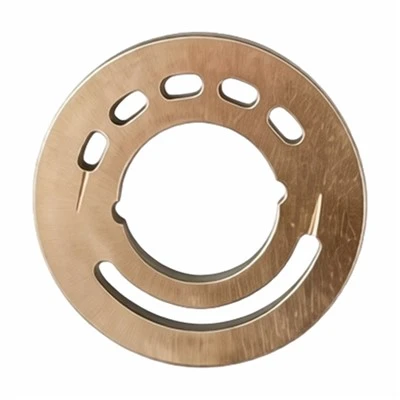
First, let’s define what an exploded view even is, plain and simple. It’s not a random diagram of parts thrown apart—it’s a 2D (sometimes 3D these days) visual that pulls every single component of a hydraulic motor out from the main assembly, lines them up in the order they fit together, and labels each with a part number. The big win here? It’s not guesswork. It’s the only way to order a part that actually fits, no returns, no waiting for a second shipment because you grabbed a seal for the wrong port size.
Now, let’s walk through the steps like we’re holding a schematic right now. I’ll use a common axial piston motor (the most popular for excavators, skid steers, and farm equipment) because that’s 90% of what we supply, so it’s real for our customers.
Step 1: Start at the “center core”—no, not the middle seat on a bus. The core of a hydraulic motor. For axial piston motors, that’s usually the shaft with the splines on one end (the part that connects to your equipment’s drive train) and a round face with little machined holes where the pistons sit. That’s your reference point. Every part in the exploded view will either fit onto this core, around it, or bolt to the end of it. I see so many guys skip this step and zoom straight to the end cap, which is why they order a piston shoe that’s too short or a seal that’s for the wrong shaft diameter. Trust me, I’ve had a guy call me at 5pm on a Friday panicking because he ordered a replacement shaft that didn’t have the right spline count—he skipped checking the core first.
Step 2: Read the part number labels like a secret code. I know, part numbers can look like gibberish: “HMT-AP-0012-045” or something. But most of the time, suppliers like us structure ’em to match the exploded view. Let’s break mine down: “HMT” is hydraulic motor, “AP” is axial piston, the next set is the component group—0012 is pistons, 0008 is end caps, 0022 is shaft seals. If a label on the exploded view says “Component Group: 0012, Part ID: 03,” that’s your piston shoe. Here’s a pro tip: never just order by a generic name like “piston shoe.” Match the part number exactly to what’s on the exploded view. I once had a customer send me a screenshot of an exploded view where the piston was labeled “Hydraulic Piston” instead of having a unique part number—turns out he was looking at a different motor’s schematic for the same model year, and the piston was 2mm too wide. We fixed it when he cross-referenced the serial number of his actual motor, which brings me to Step 3.
Step 3: Cross-reference with your motor’s serial number. This is non-negotiable. Exploded views are not universal. A 2022 John Deere 35G excavator’s hydraulic motor exploded view is not the same as a 2015 model, even if they look identical on the outside. The serial number is your cheat code—usually stamped on the side of the motor, often near the drain port, and sometimes it’s a little hard to find if it’s covered in rust, but wipe that area down with a rag and you’ll see it. When you send that serial number to us (or any good supplier), we can pull up the exact exploded view for your specific motor, not a generic one off the internet. I can’t tell you how many times guys found a random exploded view on a forum, ordered a part, and it didn’t fit because the manufacturer tweaked the design mid-year. That forum schematic was for a pre-tweak model, and their motor was post-tweak. Serial number = solves that.
Step 4: Follow the “assembly order” not just the placement. Exploded views are ordered like a timeline of how the motor goes together. The part closest to the core is first, then the next layer, until you get to the outer parts like end caps and port plates. Let’s test this: axial piston motor, core = shaft with piston holes. Next layer: pistons fit into those holes, right? Then the piston shoes (the little flat disks the pistons press against) sit on the end of the pistons. Then the swash plate (the angled disk that makes the pistons move in and out) holds the piston shoes. Then you’ve got the port plate (the flat plate that connects hydraulic fluid to the pistons) bolted to the back of the swash plate, then the end cap that holds it all in. If you mix up the order—say, trying to put the end cap on before the port plate—your motor’ll leak, or not turn at all. I had a new mechanic at a shop last year do exactly that, and he had to tear the whole motor apart twice. The exploded view’s order isn’t just for show—it’s how it fits.
Now, let’s talk about common mistakes I see guys make with exploded views, because I’ve dealt with so many returns that come from this. First, ignoring sub-components. A lot of parts have little sub-parts that are on the exploded view but easy to miss. For example, when you order a piston assembly, the exploded view will show the piston, the O-ring seal around the piston, and the retaining ring that holds it in the shaft hole. Some guys only order the piston and forget the O-ring, which means they’re gonna have to take the motor apart again a week later because of a leak. Another mistake: mistaking similar parts. There are tons of small parts in a hydraulic motor—seals, retaining rings, springs—that look almost identical, but have slightly different diameters or thicknesses. The exploded view labels each with a unique part number, so don’t just pick a ring that looks like the old one. Last week, a customer ordered a “retaining ring” that was 1mm too thick because he just grabbed the first one that matched the shape, and it got stuck in the motor’s housing. He had to pay for a service call to pull it out, and he’s gonna remember that forever.
Wait, what about 3D exploded views? A lot of suppliers now do these instead of flat 2D ones, and I’ve found they’re even easier for guys who don’t love squinting at lines. But even with 3D ones, the same rules apply: start at the core, check the part number, match your serial number. I’ve had a few guys tell me 3D views are “too confusing” because parts pop out in weird angles, but if you rotate the view to line it up with your actual motor (take a quick pic of your motor before you take it apart, hold it next to the 3D view), it’s way simpler than 2D.
Now, let’s tie this back to why this matters if you’re sourcing parts, not just reading diagrams. The best part about a good exploded view? It eliminates the “is this the right part?” panic. When you’re staring at a broken motor in the middle of a jobsite at 6am, trying to get your excavator back to work, you don’t have time to mess up an order. If you have the exploded view for your exact motor, and you match the part number, that part shows up at your shop that afternoon, no wait, no return, no lost production time. We’ve had customers tell us that since they started using our exact exploded views for their motors, their part return rate dropped by 70%. That’s not a stat we pulled out of thin air—that’s actual shop data from the 200+ shops we supply across the midwest and southeast.
Wait, let’s make this personal, like I said earlier. When I was 22, working out of a tiny garage in Ohio, I messed up an order for a skid steer’s hydraulic motor. The part I ordered was the wrong port size, so the whole motor was useless. I had to drive 3 hours to pick up the correct part, and I lost a $1,200 service contract because the skid steer was down for two days. That’s when I realized: exploded views aren’t just for ordering parts—they’re for keeping your business running, for not losing money, for not pulling all-nighters trying to fix a mistake. That’s why I make sure every customer who buys from us gets the exact exploded view for their serial number, no extra charge, no hoops to jump through.
Now, what about if you’re still stuck? Maybe you’re looking at an exploded view and you don’t know which part you need. Here’s what to do: 1. Snap a clear photo of your broken motor, focusing on the part you need. 2. Get the serial number. 3. Send both to a supplier you trust. We’ll look at the exploded view, match the part you need, and make sure you get the right one. No guesswork, no stress. I do this every single day—last week, a farmer texted me a photo of his tractor’s hydraulic motor, a serial number, and said “need the end cap seal” and I was able to send him the exact part before he even hung up the phone.

Let’s wrap this up simple. Reading a hydraulic motor exploded view isn’t rocket science. It’s just: start at the core, match the part number, cross-reference your motor’s serial number, don’t skip the small sub-parts, and follow the order they’re assembled. I’ve seen guys go from ordering the wrong part every time to being able to pull the right part in 2 minutes flat, just by following these steps. If you’re tired of wasting time and money on wrong parts, and you want to make sure your heavy equipment is up and running when you need it, don’t guess—use the exploded view.
Bimetal Strips & Sheets If you need help pulling up your exact hydraulic motor’s exploded view, or you’re not sure which part you’re looking at, reach out to us. We’re happy to walk you through it, answer any questions, and get you the right part for your motor fast.
References
- National Fluid Power Association. (2021). Hydraulic Component Identification & Assembly Guides. NFPA Press.
- Heavy Equipment Parts Association. (2022). Exploded View Best Practices for Mobile Hydraulics. HIPA Technical Bulletin.
- International Organization for Standardization. (2019). Hydraulic Fluid Power — Vocabulary — Part 2: Components. ISO 1217-2.
Qingzhou Baiyun Anti-friction Products Co., Ltd.
With abundant experience, we are one of the most professional hydraulic motor parts manufacturers and suppliers in China. Please rest assured to wholesale customized hydraulic motor parts at competitive price from our factory. Welcome to contact us for quotation.
Address: Linglongshan North Road (south of the railway bridge), Economic Development Zone, Qingzhou City, Weifang City, Shandong Province
E-mail: byantifriction@gmail.com
WebSite: https://www.baiyunbimetal.com/
