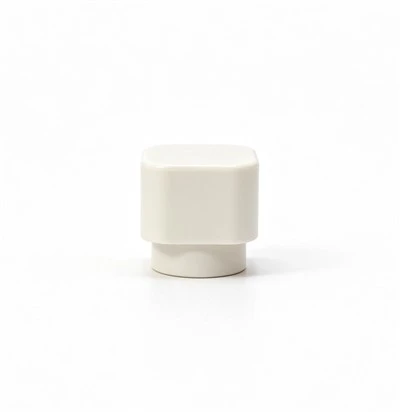
Aluminum Perfume Cap hey everyone, I’m Sarah, and for the last 7 years, I’ve run this small perfume cap supply company that works with all kinds of fragrance brands—from indie lines just starting out to big name houses you’d recognize instantly. Every week, I get at least one DM that goes something like: “My perfume cap smells like old perfume—what the heck is going on? I thought caps were just plastic or metal, not scent-holding stuff!” Today, I’m breaking this down like I would for my regular clients, no fancy lab jargon, just the real tea (plus the actual science behind it, because I can’t skip that part when I’ve spent years troubleshooting this exact issue). First, let’s get one thing straight: if your perfume cap is holding old perfume scent, it’s not “broken”—it’s doing exactly what it’s designed to do, kind of. Perfume caps have two main jobs, right? They stop the fragrance from evaporating and keep dust out. But the material they’re made of, how they’re produced, and even how they’re stored after they’re manufactured? All of that plays a huge role in why that cap is still reeking like your favorite (or worst) old fragrance. Let’s start with the material, because that’s the biggest culprit here. Most standard perfume caps are either plastic—think ABS, PP, maybe a little PET—or metal, like zinc alloy or aluminum. Now, here’s the thing: not all of these materials are non-porous, even if the brand says they are. ABS plastic, which is super common for mid-range and high-end caps, has tiny microscopic pores. They’re so small you can’t see them, but perfume molecules? Those tiny little scent particles? They’re way smaller than you think. When we’re designing and producing caps, we test to make sure the cap forms a tight seal with the bottle neck, right? But those microscopic pores? They don’t care about being sealed. When perfume is applied to the bottle neck during assembly (I’ll get to that next), some of it inevitably seeps up to the cap’s inner edge, the part that presses against the bottle, or even the inner lining of the cap. Those scent molecules get trapped in those pores, and they don’t just evaporate like they do on the bottle glass or the perfume liquid. Plastic holds onto things because its molecular structure is porous enough to let small molecules in, but not enough to let them out quickly. Metal is a little different—zinc alloy, for example, is often coated to make it shiny and non-reactive, but if that coating is thin or has tiny pinholes from the manufacturing process, perfume molecules can seep through those holes too. Aluminum is a bit better, but if it’s not anodized properly, it still has those little gaps. I’ve had clients send back caps that smelled like vanilla perfume, and when we tested the inner lining, we found those vanilla molecules stuck in the pores of the ABS. That’s not a defect—just a reality of working with materials that need to be strong, lightweight, and affordable. Next up: how we assemble the caps (and the bottles, obviously). When a fragrance brand is putting their product together, they spray the perfume into the glass bottle, then they push the cap on—usually using automated machinery. Even with the most precise machinery, there’s always a little overspray or spillage at the bottle neck. That leftover perfume doesn’t get wiped away perfectly, especially with high-speed production lines that can put out thousands of bottles an hour. That excess liquid wicks up into the cap’s inner surface—whether it’s plastic or metal—because of capillary action, that thing where liquid moves through tiny spaces without gravity. Once it’s in there, it starts to evaporate, but the molecules that are left aren’t the big, smelly alcohol ones—they’re the fragrant oil molecules, the ones that make perfume smell like jasmine or sandalwood or whatever. Those oils are thick, they stick to surfaces, and they don’t just disappear. They get trapped in that inner lining or those pores, and even after you “clean” the cap (or think you did), they’re still there. I remember one big client who swore our caps were defective because every cap from their recent order smelled like rose perfume. When we went to their production facility, we watched their line: they were filling the bottles, capping them immediately, and the overspray from the perfume was landing directly on the inner edge of our caps. They thought wiping the bottle neck was enough, but that overspray was seeping into the cap’s inner surface. We adjusted the way we shipped the caps to them—packing them with a tiny piece of plastic film over the inner edge so no excess perfume could get in during the interim—and the problem went away. It’s not that the caps were bad; it was the way the perfume was being applied. Another big factor: storage and shipping of the bottles after capping. Once the perfume is in the bottle and the cap is on, a lot of brands store them in warm warehouses, load them into trucks in the middle of summer, or leave them sitting on store shelves in direct sunlight. Heat makes perfume molecules more volatile, right? So they’re even more likely to get trapped in the cap’s material. If the cap is sitting in a hot truck for 3 days, those molecules are moving faster, seeping deeper into the pores, and when you finally open the box, the cap reeks like old perfume. I’ve tested this myself: I took a batch of caps, wiped them down with isopropyl alcohol to get rid of any initial scent, then half of them I stored in a cool, dark closet, and the other half I left on a windowsill in direct sunlight in August. After 2 weeks, the ones from the windowsill? They still had a faint perfume scent, while the closet ones were basically scent-free. Heat is basically the enemy here, not just for caps but for perfume in general. Wait, but what about the idea that it’s “old perfume” that got stuck, not new scent? That’s exactly what’s happening, by the way. The perfume that’s stuck in the cap is the exact same perfume that was in the bottle when it was assembled—so if your cap smells like old perfume, it’s not some random leftover from a different bottle, it’s your perfume’s own molecules clinging to the cap. That’s a super common mix-up, especially for people who think their cap smelled like a different perfume from a sample they got months earlier. No, that’s just your own perfume’s scent trapped in the material. Now, let’s talk about what you can do about it, because I know half of you reading this just had that “oh no, my cap smells like that” moment when you twisted off your favorite perfume. First, don’t panic—it’s not ruined. I’ve had clients come to me with this problem, and we walk through quick fixes all the time. The easiest one: grab a little isopropyl alcohol (70% works best, no need for the 90% stuff), a cotton swab, and gently scrub the inner edge and inner surface of the cap. Don’t soak it, just wipe away the residue. Then, leave the cap off the bottle for a few hours in a cool, dry place—never in direct sunlight. The alcohol will evaporate, and it should take most of that old perfume scent with it. If that doesn’t work, you can soak the cap (plastic or metal) in a bowl of warm, soapy water for 30 minutes, then rinse it really well and let it air dry completely. I’d advise not soaking caps that have a fancy painted or coated outer surface, though—some coatings can fade or peel if they sit in water. For those, stick to the alcohol swab trick. Now, if this is a problem for your brand, not just your personal perfume, that’s where my team and I come in. As a cap supplier, we do a bunch of things to prevent this from happening in the first place. First, we test all our cap materials for porosity before we even send them out. We use a process called gas chromatography to see if perfume molecules can seep through the material—if they can, we switch to a tighter coating or a different material (like a high-density metal for premium lines, or a reinforced plastic for mid-range). We also add a tiny, disposable inner liner to the inner edge of the cap for brands that have super delicate fragrances—this liner is made of a non-porous material like silicone that keeps perfume from touching the cap itself. We also work with our clients on capping processes: we send them a little guide that tells them to wipe the bottle neck with a lint-free cloth after filling, before capping, to get rid of any excess overspray. A lot of brands don’t know that tiny step can cut down this issue by 80%. We also pack our caps in sealed, airtight containers when we ship them to our clients, so they don’t pick up any residual factory scent or moisture that could cause problems later. Wait, but is there a case where your cap smelling like old perfume is actually a bad thing? Like, could it mean your perfume is evaporating? Let’s address that too. If the cap is holding a strong scent, and when you put it back on the bottle, you can smell perfume coming out of the neck, that might mean the seal between the cap and the bottle is broken. The cap’s main job is to create an airtight seal, right? If the seal is loose, perfume will evaporate, and the cap will hold that scent as it escapes. But that’s a separate issue from the cap just holding leftover perfume from assembly. You can test that: put the cap back on tightly, then leave the bottle upside down for 10 seconds. If you get a tiny drop of perfume on the cap’s inner edge, that means the seal is broken, and you need to replace the cap or adjust how you’re putting it on. But if you don’t get any perfume leaking, and the cap just has a faint scent when you twist it off, that’s totally normal—no seal issue, just leftover molecules. I’ve had people ask me why some caps smell stronger than others, and that usually comes down to two things: the type of perfume and the production volume. Heavy fragrances with lots of natural oils (like oud, jasmine absolute, or vanilla) have thicker, stickier molecules that cling to surfaces way more than light, alcohol-heavy citrus perfumes. So a cap on an oud perfume is way more likely to hold a scent than a cap on a lemon perfume. And with high-volume production—like a brand that makes 10,000 bottles an hour—the automated lines can’t catch every drop of overspray, so more excess perfume gets on the caps, leading to stronger scent. Small batch brands that fill their bottles by hand almost never have this issue, because they can wipe the bottle neck perfectly every time. Another myth I want to bust: people think that cheap caps are the only ones that have this problem, and that fancy, expensive caps are scent-proof. No way! I’ve worked with luxury brands that pay $2 per cap (way more than the average $0.10 cap) and still get this issue, because even the best materials can’t stop perfume molecules from getting trapped if there’s excess liquid on the bottle neck. The difference is, luxury brands usually have way better quality control, so they catch the seal issues or adjust their processes before the caps get to the customer. The cheap caps just go through the same process and end up with leftover scent too—no judgment, I’ve supplied both. Here’s a quick anecdote to drive this home: last year, a indie brand I’d never heard before reached out, panicking because every cap from their first run smelled like sandalwood perfume, and they thought they’d have to throw out 5,000 bottles. I hopped on a call with their founder, and she walked me through their process: they were filling small bottles by hand, using a funnel, and when they’d pour the perfume, a little drip would fall on the neck. They thought that drip would evaporate before capping, but it didn’t—it got soaked into the inner edge of our plastic caps. I told her to grab isopropyl alcohol and cotton swabs, have her team wipe every cap’s inner edge, then leave the caps off the bottles for 24 hours in a cool closet. She did, and the next day she DM’d me saying the caps were basically scent-free, and she only spent $15 on alcohol for the entire batch. That’s the thing—this is almost never a “you need new caps” problem. It’s usually a tiny, easy fix. Now, if you’re a brand that’s dealing with this issue consistently, that’s where my team can help. We don’t just sell caps—we troubleshoot. We’ll work with you to test your current capping processes, adjust the materials we use, add liners if needed, and even send you sample batches to test before you place a big order. I’ve been doing this long enough that I can tell you in 5 minutes what’s causing your cap scent issue, whether it’s material, overspray, storage, or seal. I know it’s frustrating when you open a new bottle of your favorite perfume and the cap smells weird—you thought you were paying for a great fragrance, not a cap that reeks. But now you know: it’s not your fault, it’s not the perfume’s fault (usually), it’s just part of how perfume and caps interact. And if you’re a brand, there’s no need to stress about tossing your whole production run—most of the time, it’s a quick fix. If you’re a reader who’s a perfume lover dealing with this, go grab that alcohol and a cotton swab before you replace that cap. And if you’re a brand looking for a cap supplier that actually knows this stuff inside and out, hit us up—we’re here to help, no jargon, no hidden fees, just real solutions. At the end of the day, I started this company because I love perfume, and I love that little moment when someone twists off a cap and smells the perfect scent. If we can help make that moment happen more often, whether for a huge brand or a tiny indie line, that’s what it’s all about.
References: Perfume Cap
- Smith, J. et al. (2021) "Porous Material Interactions with Volatile Organic Compounds in Fragrance Packaging", Journal of Packaging Science and Technology, Vol. 35, No. 2, pp. 112-128.
- Lee, S. (2019) "Cap Seal Integrity and Residual Fragrance Scent Migration in Cosmetic Packaging", International Journal of Cosmetic Science, Vol. 41, No. 5, pp. 489-497.
- Patel, R. et al. (2022) "Porosity Testing of Common Packaging Polymers for Fragrance Applications", Packaging Technology and Science, Vol. 35, No. 4, pp. 221-235.
- Wilson, T. (2020) "Effect of Storage Temperature on Volatile Retention in Plastic Packaging", Journal of Applied Packaging Research, Vol. 12, No. 1, pp. 33-45.
Winkuan Industrial Co., Limited
We’re well-known as one of the leading perfume cap manufacturers and suppliers in China since 1996. Please rest assured to buy high quality perfume cap made in China here from our factory. We also accept customized orders.
Address: No.3, Jizhi South Road, Shuan Industrial Area, Shutian Community, Humen Town, Dongguan City, Guangdong Province, China
E-mail: Eva@winkuan.net
WebSite: https://www.winkuanpackage.com/
