Can a jaw crusher be used for recycling materials?
Last month, I had a call from a small-scale construction company owner in Ohio. He’d been renting a concrete crusher for a demolition site, but the machine kept breaking down mid-operation—and the rental fees were eating into his profits. “I thought jaw crushers were just for mining,” he said. “Can they even handle recycling stuff?” His question stuck with me, because it’s one I hear constantly from folks who haven’t worked closely with crushing equipment: what a jaw crusher can do beyond the quarries and ore mines I’ve been supplying for 12 years. Jaw Crusher
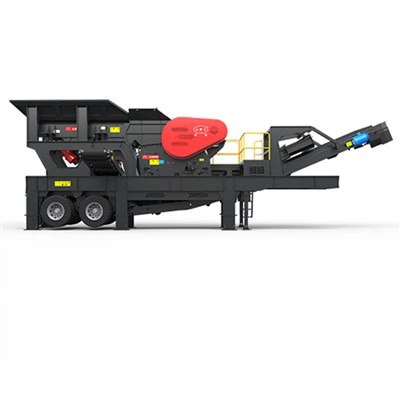
At the core of it, jaw crushers are brutal, workhorse machines. They operate on a simple principle: two vertical plates (one fixed, one moving on an eccentric shaft) squeeze material between them until it fractures. That basic force is exactly what makes them perfect for breaking down the tough, dense materials that pile up at recycling yards—and it’s why we’ve supplied our models to concrete recyclers, asphalt processors, and even C&D (construction and demolition) waste operators for decades now. But there’s more to it than just “they can do the job.” Let’s break down the how, the why, and the real-world examples that prove this isn’t a stretch.
First, let’s talk about C&D waste, which is one of the biggest recycling challenges in North America. Every year, the U.S. Environmental Protection Agency reports that 600 million tons of construction and demolition debris is generated, only 50% of which is recycled. A huge chunk of that is concrete and asphalt—materials that were once thought to have no second life. Early recycling efforts used impact crushers, but those machines are designed for softer, more uniform materials. When you feed rebar-laden concrete into an impact crusher, the steel will often bounce or even damage the hammer mills, forcing costly repairs. Jaw crushers? Their crushing action is compressive, not impact-based. That means rebar can slip through the chamber (we add optional reinforcing bar separators for exactly this) while the concrete fractures cleanly along aggregate lines.
I watched this play out last year with a customer in Indianapolis who was recycling old bridge deck concrete. Before they bought our 32×42 jaw crusher, they were sending all their waste to a landfill at $75 per ton. Now, they run the concrete through the crusher, sift out the recycled aggregate (used for new road base and sidewalks), and even sell the rebar to a scrap yard. Their monthly landfill costs dropped by 60%, and they now generate an extra $12k in revenue from the recycled material. That’s not a hypothetical; that’s a real operator using a jaw crusher for recycling to turn a cost center into a profit center.
But jaw crushers aren’t just for concrete. Asphalt recycling is another huge use case. Asphalt is softer than concrete but has a sticky, bituminous binder that can gum up smaller crushers if not processed correctly. The key here is adjusting the closed-side setting (CSS)—the smallest gap between the two jaws when they’re fully closed. For asphalt, we recommend a CSS of 1 to 2 inches, which is just tight enough to break the binder without melting or clumping it. A customer in Detroit uses our 25×40 jaw crusher specifically for asphalt reclamation: they tear up old parking lots, feed the asphalt into the crusher, and the end product is a hot mix asphalt base that can be reused on new driveways and road shoulders. They’ve even started accepting asphalt from local municipalities, which gives them a steady, year-round stream of material.
Wait, but what about other recyclables? Like brick, glass, or even tile? Let’s get into that. Clay brick is dense and has a high compressive strength—around 10,000 psi, which is close to some concrete mixes. Our smaller 16×24 jaw crushers are perfect for small brick recycling yards that process pallets of old brick from home renovation sites. Glass, though, is a different story. It’s brittle, so you have to adjust the crusher’s speed and feed rate carefully to avoid creating too much fine powder (which is hard to sell). We’ve modified a few models with slower eccentric shafts and wider feed openings for glass recyclers, who then use the crushed glass for landscaping mulch or as a raw material in fiberglass production. Last year, one of our glass clients in Chicago told us they cut their waste sent to landfill by 85% after switching to our jaw crusher from a ball mill, which was too slow for their volume.
Now, I know what some of you are thinking: “Why not just use a dedicated recycling crusher?” Let’s address that. Dedicated recycling crushers (like impactors with scrap separators or hammer mills) have their place, but they’re often more expensive to maintain. Hammer mills, for example, wear out quickly when processing dense materials like concrete, because the hammers are in constant contact with hard aggregate. Jaw crushers have wear parts (the cheek plates, flywheels, and jaw dies) that last 2 to 3 times longer, even with heavy C&D waste. For small to mid-sized recycling operations, that lower maintenance cost adds up. A customer in St. Louis crunched the numbers: when they switched from a hammer mill to our jaw crusher, their annual wear part costs dropped from $18,000 to $5,500. That’s a difference that directly impacts their bottom line, especially when margins in recycling are tight.
That said, there are caveats. You can’t just take a mining jaw crusher and plop it in a recycling yard and expect it to work. The design is key. Mining jaw crushers are built for hard, uniform ore, but recycling material is often inconsistent—you’ll have 2-foot concrete chunks one day, and thin sheet metal (or wood, or drywall) the next. That’s why we design our recycling-focused models with: wider feed openings to accommodate larger chunks, dust suppression systems to handle C&D debris, and optional metal detectors to pull out rebar, nails, and aluminum before they enter the chamber. I’ve seen customers try to use standard mining crushers for recycling and end up with clogged chambers, damaged jaws, and lost time. It’s not the machine’s fault—it’s the wrong tool for the job.
Another consideration is output quality. When recycling, you need a consistent end product to sell. Jaw crushers produce a cubical end product (unlike impact crushers, which can produce more flat, angular pieces) that’s highly sought after for road base and concrete mixes. Recyclers tell us that their cubical aggregate fetches $5 to $10 more per ton than angular material. That’s a big deal for a small operation. We recently worked with a customer in Atlanta who was selling their crushed concrete for $15 per ton when they used an impact crusher. After switching to our jaw crusher, the product was cubical, so they could market it as “high-grade recycled aggregate” and raise the price to $25 per ton. Their monthly revenue from aggregate sales increased by $22,000—all because of the shape of the material coming out of the crusher.
Let’s also talk about sustainability, which is a huge driver for recycling these days. Governments across North America are offering tax incentives for companies that reduce landfill waste, and a jaw crusher lets you meet that demand. The EPA’s 2023 report on C&D waste found that using recycled concrete in new construction reduces carbon emissions by 30% compared to using virgin aggregate. By using a jaw crusher to process C&D waste, you’re not just making money—you’re helping your customers hit their sustainability targets, which is a competitive advantage in a lot of industries.
I’ve been in this business long enough to see trends come and go. A decade ago, most recycling yards only used jaw crushers as a secondary step, after an impact crusher or shredder. Now, jaw crushers are often the primary machine for C&D and asphalt recycling, because they’re more versatile, have lower operating costs, and produce a higher-quality product. We’ve even supplied a few models to companies that process construction waste into 3D printing material for roads, which is a new, fast-growing segment.
But here’s the thing: every recycling operation is different. A small yard that processes 50 tons of C&D waste a month has different needs than a large municipal operation that handles 500 tons a day. That’s why we don’t just sell a one-size-fits-all jaw crusher. We work with each customer to assess their material, their desired output, and their budget to recommend the right model. For a customer in a rural area with a small pickup truck fleet, we might suggest our compact 10×36 jaw crusher, which is easy to transport and can process up to 20 tons per hour. For a large urban recycling yard, we’ll recommend our 36×48 model, which can handle up to 300 tons per hour and has integrated dust control.

If you’re reading this, and you’re running a recycling operation, or thinking about starting one, I want you to know: a jaw crusher is not just for mines. It’s a powerful, cost-effective tool that can turn waste into a valuable resource. But you have to pick the right one—one designed for recycling, not just for mining. We’ve helped hundreds of customers make that switch, and we can help you too. If you’re ready to talk about what model would work for your operation, or if you have questions about maintenance, feed settings, or anything else, reach out to us to discuss your needs.
Gold Mining Pump Parts References
- U.S. Environmental Protection Agency. (2023). Construction and Demolition Debris Management in the U.S.
- Smith, J. (2022). “Crusher Selection for C&D Recycling.” Journal of Solid Waste Technology and Management, Vol. 48, No. 3, 124-137.
- National Asphalt Pavement Association. (2021). Recycled Asphalt Pavement (RAP) Processing Guide.
- Miller, L. (2023). “Comparative Wear Analysis of Jaw Crushers vs. Hammer Mills for Concrete Recycling.” International Journal of Recycling of Construction Materials, Vol. 11, No. 2, 45-52.
Linyi Yuxiang Import and Export Trade Co., Ltd.
We are one of the most professional jaw crusher manufacturers in China, specialized in providing high quality products. We warmly welcome you to buy durable jaw crusher for sale here from our factory. Good service and low price are available.
Address: Linyi Comprehensive Bonded Zone
E-mail: sales-top1@bfgoldmachine.com
WebSite: https://www.bfgoldmachine.com/
