Alright, let’s break this down in plain terms so it’s easy to wrap your head around. A vertical turbine heavy-duty fire pump—let’s call it VTFP for short, yeah? It’s not some random fire hose accessory; it’s the workhorse that keeps commercial, industrial, or high-stakes residential fire protection systems from failing when you need them most. Let’s start with what makes it “vertical” versus other fire pumps. Most fire pumps sit horizontally on a foundation, right? But this one has its motor mounted on top, and the pump assembly drops down into a wet pit or a pressurized water tank. No extra floor space taken up—total win for facilities where real estate is tight, like downtown skyscrapers or industrial plants crammed with equipment. Heavy-duty Fire Pumps
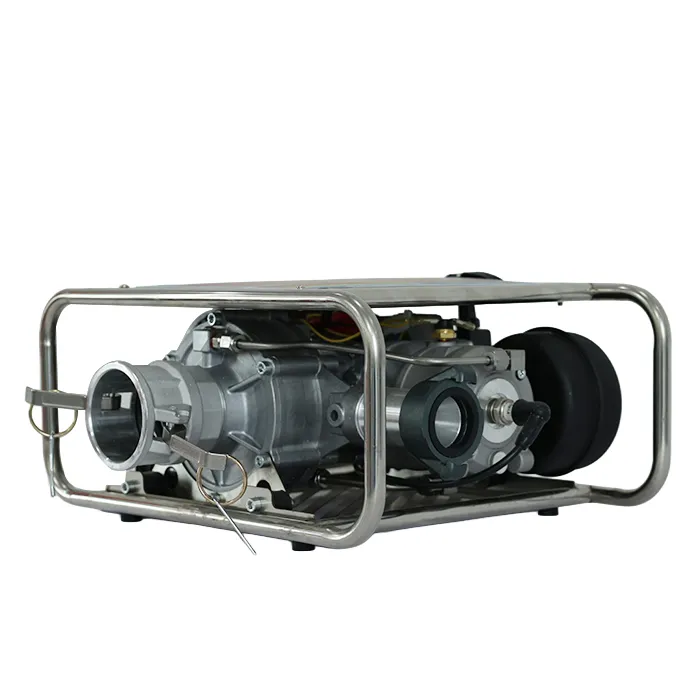
Now the “heavy-duty” part is non-negotiable here. This isn’t a fire pump for a tiny office building with a 50-person capacity. Heavy-duty means it’s built to run nonstop for hours—think a warehouse blaze that takes a while to contain, or a high-rise where every second counts but water flow can’t drop. As a supplier of these pumps, I deal with customers all the time who skimp on the “heavy-duty” label and end up with a pump that sputters mid-emergency. Trust me, that’s not a call you want to get at 2 a.m.
Let’s get into how it works, in simple terms. When a fire alarm triggers, the system’s pressure switch or fire pump controller kicks in. It either pulls water from a suction source (that wet pit I mentioned earlier) or draws from a municipal line, pushes it down the vertical pump column, spins the impellers (those are the blades that move water), and blasts it out to your sprinklers, standpipes, or foam systems. The vertical design lets it pull water from a deep source without needing extra priming stuff that horizontal pumps sometimes need—no messing around with priming valves when every second matters.
Wait, why would someone choose this over a horizontal fire pump? Let’s list the practical reasons. First, space: if your mechanical room only has a 3-foot clearance above the floor, a horizontal pump needs that height plus floor space, but a vertical turbine’s motor is on top, so you just need that overhead room. Second, suction depth: if your water source is 20, 30 feet deep (like a well or a rainwater harvesting pit), a vertical turbine can handle that easily. Third, durability: heavy-duty models use cast iron or stainless steel components, not flimsy plastic, so they stand up to corrosive water, debris, and years of idle time (which is when pumps are most likely to fail). Most of the customers I work with are in commercial real estate, chemical plants, or airport hangars—places where a fire could cause millions in damage, so they don’t cut corners.
Now, let’s talk about the “heavy-duty” specs that matter. A standard fire pump might handle 1,000 gallons per minute (GPM), but a heavy-duty vertical turbine can do 2,000, 3,000 GPM—even more, depending on the model. And pressure? It’s not just low-pressure for small sprinklers; it’s high enough for standpipes on a 50-story building where water has to fight gravity all the way up. Also, heavy-duty means it’s NFPA 20 compliant— that’s the National Fire Protection Association’s standard for fire pumps. I don’t sell anything that doesn’t meet NFPA 20 because if it’s not tested to that standard, it’s just a metal hunk.
Common myths I hear from customers: “Vertical pumps are less reliable.” Nah, not if they’re heavy-duty. I’ve had customers run their VTFPs for 12 hours straight during a plant fire, no issues. Another one: “They’re harder to maintain.” Sure, you have to pull the pump assembly up for inspections, but modern heavy-duty models have quick-disconnect fittings that make that a 2-hour job instead of a full-day project. Horizontal pumps sometimes need you to disconnect pipes on both sides, which is way more hassle.
Who uses these exactly? Let’s break it down: Skyscrapers—because their mechanical rooms are often in the basement, and vertical pumps drop down into the underground water tank. Industrial facilities—factories with flammable materials need massive water flow, and a vertical turbine takes up less floor space than a horizontal one next to conveyor belts. Hospitals—they can’t afford a fire to shut down critical care, so their fire pumps have to be redundant (two pumps, just in case one fails) and heavy-duty. Even ports—they need pumps to handle saltwater for fire fights on ships, and stainless steel heavy-duty models resist corrosion from salt.
Wait, let’s talk about the controller, too. A vertical turbine heavy-duty fire pump doesn’t just run on its own. It has a smart controller that monitors pressure, flow, and temperature. If pressure drops (like when a sprinkler activates), the controller ramps up the pump speed automatically. If there’s a power outage—say the grid goes down during a storm—the heavy-duty models come with a backup diesel engine, not just electric. That’s non-negotiable for any heavy-duty fire pump; you can’t rely on city power when the fire’s happening at the same time as a blackout.
From a supplier’s side, I don’t just sell the pump and leave. A lot of companies just ship it and call it a day, but I offer pre-installation checks, routine maintenance plans, and 24/7 support. Because when a fire hits, you don’t want to be waiting for someone to answer a 9-to-5 call. Last year, a manufacturing plant in Ohio had a small fire on a weekend—their horizontal pump died because it wasn’t heavy-duty, and they called me at 10 p.m. We got a vertical heavy-duty pump shipped overnight, and their backup system kicked in. No major damage, and that plant’s been a repeat customer ever since.
What about common mistakes people make when choosing one? Going too small. I had a restaurant chain try to use a 1,000 GPM vertical pump for a 10-story location—turns out they needed 2,500 GPM, and when a grease fire broke out in the kitchen, the sprinklers didn’t have enough pressure. They had to replace it, which cost way more upfront than if they’d gotten the right model the first time. Another mistake: not checking the water source. If your pit is dirty with debris, you need a heavy-duty pump with a strainer, otherwise impellers will clog and the pump will fail. That’s a detail I always go over with customers—no guesswork.
Let’s clarify something else: vertical turbine vs. submersible pumps. Submersible pumps go all the way into the water, but their motors are inside the water, which can cause issues with electrical components if there’s a seal leak. Vertical turbine pumps have the motor above the water, so electrical parts are safe from water damage. That’s a huge plus—seal leaks happen, and you don’t want your pump’s brain getting soaked.
So to wrap this up in plain talk: a vertical turbine heavy-duty fire pump is a space-saving, workhorse water mover built to stand up to nonstop use, meet strict safety standards, and keep your fire protection system working when every second counts. It’s not the cheapest option, but it’s the one that prevents property damage, saves lives, and keeps facilities running when things go wrong.
Now, if you’re in the market for a fire pump—whether you’re designing a new skyscraper, upgrading a plant’s fire system, or replacing a failed unit—let’s chat. I’ll walk you through specs, make sure you get the right size, and even connect you with trusted installers. No sales pitch, just honest advice because I’ve seen firsthand what happens when you skip the heavy-duty part.
Fire Extinguishing Equipment References:
- National Fire Protection Association. (2020). NFPA 20: Standard for the Installation of Stationary Pumps for Fire Protection.
- Fire Protection Research Foundation. (2021). Vertical Turbine Fire Pump Performance and Maintenance Best Practices.
- Underwriters Laboratories Inc. (2022). UL 448: Standard for Stationary Pumps for Fire Protection.
Zhenjiang Linhao Forest Fire Prevention Equipment Co., Ltd.
Zhenjiang Linhao Forest Fire Prevention Equipment Co., Ltd. is one of the most reliable manufacturers and suppliers of heavy-duty fire pumps in China, featured by quality products and low price. Please rest assured to wholesale customized heavy-duty fire pumps from our factory. Contact us for quotation and free sample.
Address: No.16, Fenghuangshan Road, Runzhou District, Zhenjiang City, Jiangsu Province
E-mail: lh@lhfirefighting.com
WebSite: https://www.lhfirefighting.com/
